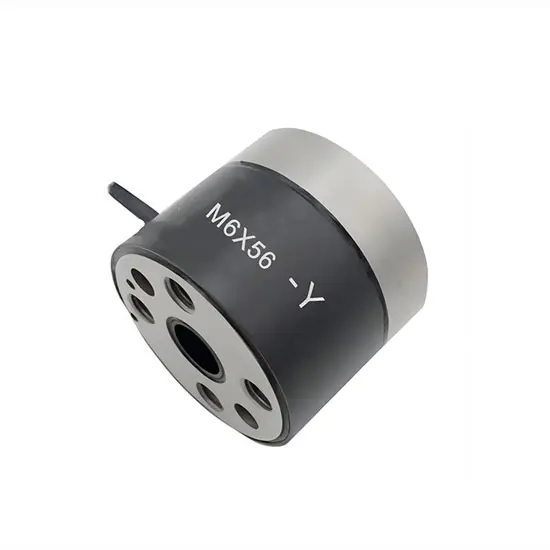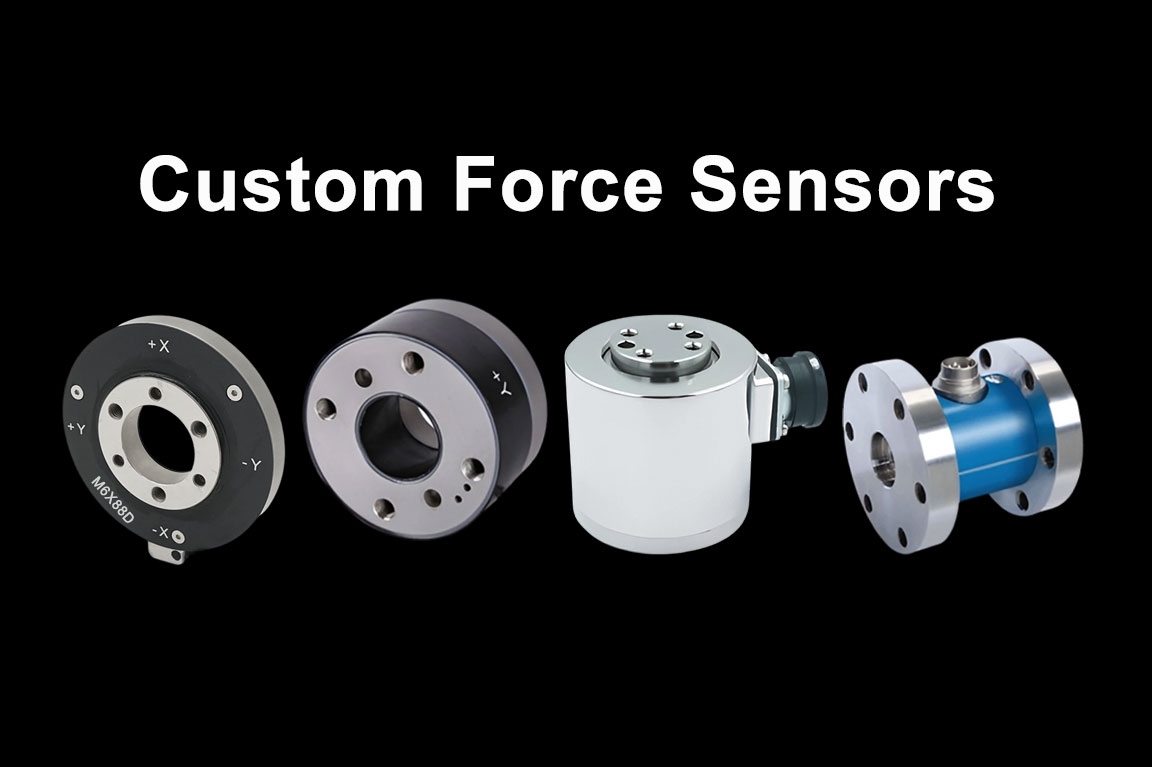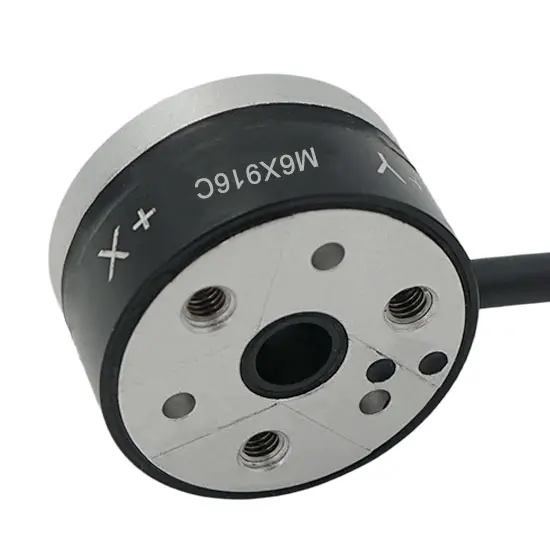
To ensure commensurate precision and safety within a tremendous variety of use cases, modern industries require high-performance sensors. Force and torque sensors are crucial components in robotics, automation, aerospace, automotive testing, and sophisticated manufacturing systems. For precision and reliable measurement applications, companies look for force and torque sensor providers, such as MareX, who have knowledge and experience of their specific applications.

What do Torque and Force Sensors Mean?

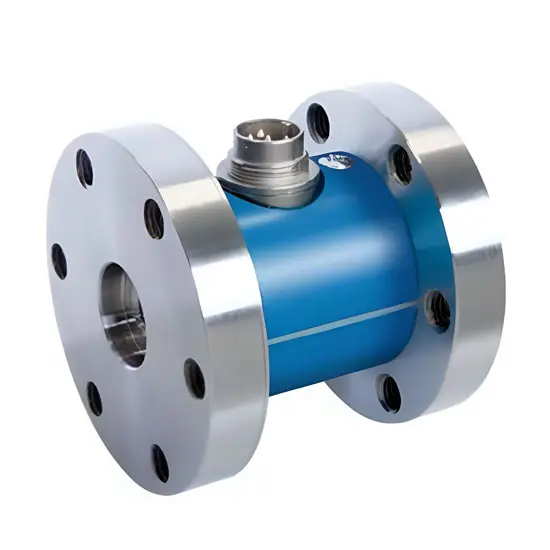
A force and torque sensor is a device that measures the degree of exerted force (push or pull) and torque (rotational force). When these sensors experience mechanical force, they transform the mechanical force into alterable electrical impulses that can be evaluated for the purposes of supervising, regulating, or empirically examining something.

Force magnitude is usually quantized in newtons (N) as torque is in newton meters (Nm). Such precision is always required in robotic arms, production lines, and testing environments.

Custom sensor manufacturing advancements have made it possible to build modern sensors for your specific use case requirements: size; load capacity; environmental sealing (IP66); and type of output signal.

How Does a Force and Torque Sensor Work?

The determining working element of a force and torque sensor is, in most cases, a strain gauge. Here’s a simplified breakdown:

  1. Mechanics of Force Application

When there is force or torque applied to the sensor there is a transient structure change of the sensor which is called slight deformation. However, this deformation is tiny yet it is measurable.

  1. Response of Strain Gauges

The sensor’s strain gauges respond to this deformation. When a structure experiences deformation, the strain gauges respond by altering their electrical resistance.

  1. Conversion of Signals

The change in resistance is converted to an electrical signal. The produced signal is directly proportional to the force/torque applied.

  1. Processing of Data

The signal is processed and calibrated to yield precise measurements, and this information can be used by real-time monitoring, feedback, and control systems.

The sensors offer high performance, and they offer the most information when it comes to accurate measurements, which makes them essential for accurate and reliable measurement in an industry.

What is a Multi Axis Force Torque Sensor?

A Multi Axis Force Torque Sensor is one of the most advanced sensors in the world which measures force and torque in multiple dimensions simultaneously, as opposed to single-axis sensors which only capture measurement along one line and at one rotation point. These measures along the X, Y, and Z and also consider rotational torque about these axes.

These sensors are widely used in robotics, especially in robotic arms and end-effectors that require intricate movements and interactions. Today, multi-axis force sensors are commercially available and are equipped with sophisticated engineering solutions for end-users in these domains.

Primary Benefits

  • The ability to capture several different types of force simultaneously is a major benefit of this sensor.
  • Enhances accuracy on multilayered procedures.
  • Reduces the quantity of required sensors.

Applications of Force and Torque Sensors

Due to the versatility and accuracy, force and torque sensors have a broad range of uses in different industries.

  1. Robotics and Automation

Force feedback from sensors like yours allows robots to do delicate and precise work. Important for things like assembly, material handling and collaborative robotics.

  1. Automotive Industry

Databases used in engine testing, validate steering systems and components for safety and performance.

  1. Aerospace

Helps in the structural testing and simulation to see if the components can withstand excessive forces and extreme conditions.

  1. Manufacturing and Quality Control

During the production processes, sensors keep forces under control to ensure the quality of the final product.

  1. Medical and Biomechanics

Measuring human interaction forces accurately have applications in prosthetics, surgical instruments, and in research.

Importance of High Performance Sensors

With the pace of growing innovation in industries, the demand for high performance sensors is inevitable. Sensors have a direct impact in terms of:

  • High accuracy and repeatability
  • Durability in harsh environments
  • Real-time data monitoring
  • System efficiency
  • Decreased downtimes and reduced errors.

The torque sensors manufacturer you are dealing with should have quality assurance sensors, advanced calibration, and long-term reliability.

Importance of Custom Sensor Manufacturing

Not all applications can be satisfied with standard sensors. Custom sensor manufacturing comes into play in those scenarios. Custom sensors can be designed to meet demands such as:

  • Special shapes and sizes
  • Certain ranges of loads
  • Resistance to specific environmental elements (temperature, moisture, vibration)
  • Specific output signals and integration

At MareX, we engineer bespoke solutions that cater to your operational requirements and deliver in the most difficult conditions.

Choosing the Right Force and Torque Sensor Provider

Selecting a force and torque sensor manufacturer demands certain considerations to facilitate selection of a manufacturer that guarantees reliability and accuracy. Here are a few factors that will influence the choice of a manufacturer:

  • Possibility of Customization: for manufacture of application specific sensors
  • Precision & Calibration: manufacturer offers high accuracy and adequate calibration support
  • Relevant Experience: Practical exposure across several industries
  • Integration: the process to be integrated with existing systems
  • Durability & Quality: The sensors are meant to withstand challenging situations

MareX stands out as a trusted partner, offering innovative solutions backed by engineering expertise and a commitment to quality.

The Multi Axis Sensors: The Future of Sensors

Automation has a growing demand for precise and dynamic measurements. The multi-axis torque and force sensors are critical for the next in demand systems.

These sensors enable machines to possess the ability to “feel” and respond to the environment around them. This ability is particularly important for the following:

  • Collaborative robots (cobots)
  • AI-driven automation
  • Advanced testing systems
  • Smart manufacturing

The widespread availability of Multi axis force sensors for online purchase has made it easier for businesses to incorporate these sensors into their operations.

Conclusion

In today’s engineering world, the force and torque sensors are the backbone of industrial processes. They measure physical forces and convert them into actionable data, which can improve control, increase efficiency, and enhance safety of processes and applications.

Sensors are key parts of almost any system, and their choice can significantly change the system quality and efficiency. You can opt for standard or custom-designed sensors. As a leading manufacturer of torque sensors and multi-axis force torque sensors, MareX provides high-end, efficient solutions to meet your needs.

With rapid changes across various sectors, investing in sensor technologies will be a key enabler of competitiveness and preparedness for the future.

Custom Sensor Manufacturing Expert

The rapid pace of change makes accurate data essential for modern business. And central to the collection of that data are sensors. They measure temperature, pressure, motion and flow among other critical values. These measurements allow machines to run without a hitch and safely. Standard sensors could be purchased for any general scenario, however are not always suitable for each situation. That is where Custom Sensor Manufacturing comes into play.

We believe that no business should have convoluted their systems to conform to dumb sensors; at MareX, we design with adaptability in mind. The sensor is better off designed according to the system’s specific requirements. By partnering with an expert in custom sensor manufacturing, these companies have the opportunity to improve performance, mitigate risk, and create better products.

Understanding the Real Need

Every industry has different challenges. A marine business is handling saltwater and humidity. An industrial plant is exposed to heat, pressure and vibration. Medical equipment as a whole needs exceptional precision and very stringent safety standards. Standardized sensors have more general purpose designs and therefore do not necessarily operate optimally in all environments.

Custom Sensor Manufacturing addresses this issue by designing sensors to meet the specific needs of the job. All of these factors are selected for the sensor based on where it is going to be used and how. Trade-offs are thus rendered moot. A better fit between sensor and application leads to more effective, longer-lasting systems.

Improved Accuracy and Performance

One key reason that companies adopt Custom Sensor Manufacturing is accuracy. Measurement errors amounting to even a few millimeters can lead to system failures, or reduced efficiencies over time. Each sensor is bespoke calibrated for its use. This enhances measurement precision and consistency.

Machines run better when sensors tell the truth. Maintenance can be planned properly. Unexpected breakdowns become less common. In the long run accurate sensing increases overall productivity.

Custom Sensor Manufacturing enables your businesses to have controllable operations. MareX in particular delivers sensors that are stable and maintain reliable readings on their real working conditions.

Stronger Durability

As with most industries, many are working under harsh environments. Poorly designed sensors can take damage from heat, dust, moisture, chemicals and heavy movement. Standard products might not last as long under these conditions.

When working with engineers of custom sensors, they choose sturdy materials and protective designs appropriate to the environment in which the sensor will function. The sensor lifespan is extended and downtime reduced. Keeping a sensor for long will simply save on replacements and maintenance costs.

Durability is a focus at MareX. We build sensors to deal with real-world stress. We strive to develop solutions that are effective under tough circumstances.

Easier Integration

The second major benefit of Custom Sensor Manufacturing is seamless integration. Standard sensors may need additional connectors, adapters or modifications. It also increases installation time and adds cost.

A custom solution has been crafted so that elements were designed from the ground up. All these features are tailored to the customer’s specifications including output types, mounting styles, dimensions and cable lengths. This speeds up and simplifies the installation.

Integration should never be complex with MareX. When properly designed, a custom sensor integrates seamlessly into the system and cuts down on errors and time during manufacturing.

Supporting Innovation

When companies are not constrained by off-the-shelf components then being able to innovate becomes simpler. Custom Sensor Manufacturing Provides Engineers with Greater Freedom to Develop New Products These sensors can then be further miniaturised, reduced in weight or upgraded to meet the needs of contemporary technologies.

Business partnerships with MareX become a significant part of the business development process. We enable design discussions, experimentation, and iteration. This collaboration often reduces development cycles and assists in bringing products to market sooner.

Custom Sensor Manufacturing is more than just creating a product. It means not just supporting creative ideas, but making them a working solution.

Long-Term Cost Benefits

Some companies fear the price tag of custom solutions. It may require a slightly higher initial investment, but Custom Sensor Manufacturing tends to save money in the long run. A well-designed sensor minimizes system alterations, mitigates failures, and reduces maintenance demands.

Reliably functional sensors are minimizing downtime and, in turn, safeguarding productivity. They also decrease warranty claims and service costs. The savings can be substantial over a product’s full life.

Scalability for Growing Businesses

As companies expand, their production demands grow as well. Custom Sensor Manufacturing can support this growth by providing flexible solutions that adapt to changing needs. A professional manufacturing partner plans for both small production runs and large-scale manufacturing. They understand how to maintain consistent quality while increasing output. With the right partner, businesses can scale smoothly without compromising performance, accuracy, or reliability.

At MareX we create processes that scale nicely. So whether a client requires prototypes or thousands of units, we apply the same level of quality and consistency. With changing markets it is important to be flexible, and we ensure our clients are prepared for future growth.

Building a Strong Partnership

Partnering with a Custom Sensor Manufacturing specialist provides technical expertise and assistance. Instead of just selling a product, an effective partner provides value by helping resolve problems and enhance performance.

At MareX, we believe in long-term relationships. We communicate clearly, listen critically, and remain engaged even beyond delivery. When changes are required, we’re quick to respond. A partnership with this approach creates trust and confidence.

Having a trusted manufacturing partner allows businesses to devote more time, energy, and resources on growth and innovation.

Conclusion 

At MareX, Custom Sensor Manufacturing is not a service; it is our way of life. It is a promise to excellence, accuracy, and collaboration.” No two applications are alike, and no client should have anything short of a tailored solution.

Opting for Custom Sensor Manufacturing gives businesses improved accuracy, enhanced durability, seamless integration, and cost-effectiveness in the long run. Even more importantly, they gain a partner who has been through their struggles and partners with them to build trusted solutions.

We proudly serve companies that require high performance and reliable results. From design through production, MareX stands ready to deliver custom sensor solutions that enable your systems to look and perform their best—now and into the future.

Introduction

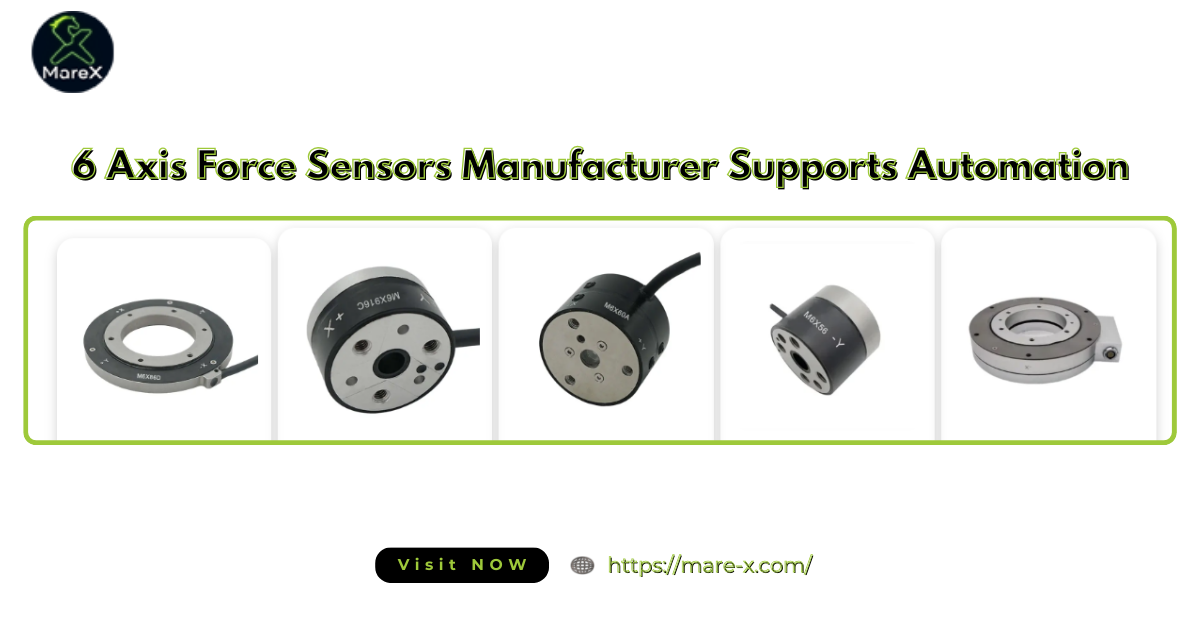
With the swift pace of industrial change today, automation is not just a luxury but also a necessity. Whether it’s automotive assembly lines, semiconductor fabrication, or otherwise, manufacturers turn to accuracy-driven sensors to keep their processes in order. Six-axis force sensing among them has a key role. 6 axis force sensors manufacturers a leading manufacturer in advanced sensing technology that unlocks new capabilities for robotics, streams quality control and improves productive workflows.

 In this blog, we discuss how a 6 axis force sensor manufacturer enables automation in various industries and why it’s essential to choose the right partner (MareX) for maximum measurable impact.

Force Sensing and the Application in Modern Automation

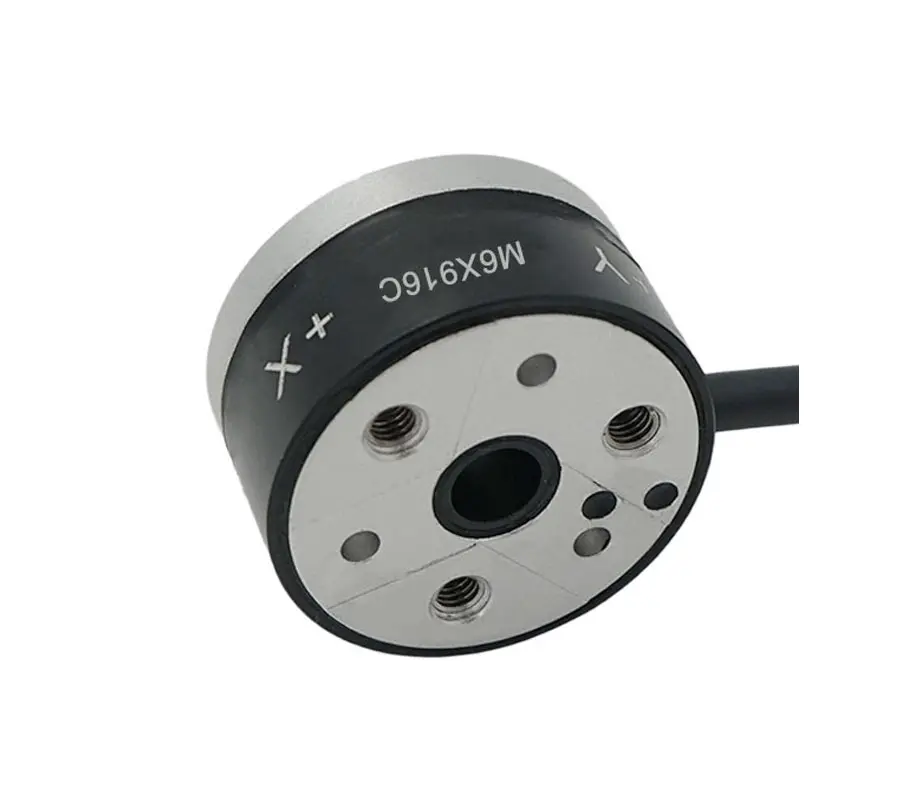
Automation depends heavily on data. Feedback must be accurate for robots and intelligent machines to carry out sensitive and complex work. Six Axis force sensors are used to determine forces in X, Y and Z (linear) and Mx, My, Mz (rotational) axes. This has allowed machines to understand how they interact with their environment by measuring it in a multi-dimensional way.

Professional 6 axis force sensors manufacturers have designed real time measurements sensors which capture these accurate readings. Such information helps automated systems modify their movements, minimize mistakes and work safely alongside humans.

Enhancing Robotic Precision and Control

Robotics lies at the heart of automation. These Industrial Robots have wide applications like welding, assembly, packaging and inspection. Yet many operations are not as simple as programmed motion, they require feedback-based control.

Reliable 6 Axis Force Sensors Manufacturer Who Provides Force Sensors to Robotic Arms To Detect Contact Forces When Performing:

  • Precision insertion
  • Surface finishing
  • Torque measurement
  • Automated screwing
  • Pick-and-place operations

In electronic device assembly, for instance, components need to be placed so that correct pressure is exerted on them to avoid damage. By maintaining a perfect pressure, your robot has the potential to carry out tasks effectively with the help of high performance sensors supplied by one 6 axis force sensor manufacturer.

Improving Quality Assurance and Testing

Quality control is a key element of automated production lines. Every product that manufacturers produce must meet stringent performance criteria.

This need is catered to by a specialized 6 axis force sensors manufacturer who provides sensors that measure multi-directional forces during testing procedures. Applications include:

  • Product durability testing
  • Load and stress analysis
  • Structural validation
  • Mechanical component calibration

Automated systems often utilize the 6 axis force sensors manufactured by a proven 6 axis force sensors supplier to measure minute differences that might not be detectable otherwise. All of this means more reliable products and happier customers.

Supporting Human-Robot Collaboration

Collaborative robots (cobots) are revolutionizing the future of work. Unlike industrial robots, cobots (collaborative robots) remove the barrier and work collaboratively with humans. In such environments, the most important thing is safety.

The certified 6 axis force sensor maker takes a critical part in human robot safety. Force sensors that sense unexpected contact allow robots to stop or adjust motion immediately.

In medical device manufacturing, for instance, robots need to work carefully alongside technicians. So, the excellent sensor system provided by the trusted 6 axis force sensors manufacturer keeps it responsive and safe.

Customization for Industry-Specific Applications

All automation systems are different. Each industry (automotive, aerospace, medical, electronics, etc.) has its own needs.

A trusted 6 axis force sensors manufacturer provides customization options like:

  • Compact sensor designs
  • High-load capacity models
  • High-temperature resistance
  • Specialized mounting configurations
  • Integration with specific robotic platforms

Customization enables integration with current frameworks. A Leading manufacturer of 6 axis force sensors collaborates with their customers for renewed and advanced solutions to enhance the efficiency in their operations.

Driving Data-Driven Manufacturing

Industry 4.0: Smart Factories enabled by data analytics This intensity is generated by the sensors that alert these intelligent systems.

Notice how a manufacturer of 6 axis force sensors with technology-driven nature makes their products suitable for modern data acquisition systems and industrial communication protocols. This connectivity allows:

  • Real-time monitoring
  • Predictive maintenance
  • Process optimization
  • Performance benchmarking

Automation systems that rely on solutions served by an advanced 6 axis force sensor manufacturer experience direct human intervention in achieving the data and experience actionable insights to get increased productivity and less operational costs.

Building For Harsh Environments: The Case for Durability and Reliability

Automation systems often must function in harsh environments of heat, vibration, moisture and dust. Such failure affects the entire production line.

Widely used industrial equipment, like 6 axis force sensors manufacturers, are made with durable materials, or sealed enclosures, and undergo thorough testing procedures. This provides durability for long-term and consistent performance.

The manufacturers pick the six axis force sensors manufacturer that is reputed and thus help in preventing downtime and maintenance costs. That spans aerospace and automotive verticals, where high-fidelity and repeatability are crucial.

Accelerating Innovation in Emerging Technologies

Automation is spreading beyond traditional manufacturing and into new arenas including:

  • Autonomous vehicles
  • Advanced prosthetics
  • Surgical robotics
  • Space exploration
  • Renewable energy systems

These innovations are made possible through the contributions of a leading 6 axis force sensors manufacturer that provides high-sensitivity and lightweight sensor technologies.

An example of an application is in robotic surgical systems that need to provide accurate force feedback for delicate operations. Ultra accurate sensors by a leading 6 axis force sensors improve control as well as patient safety.

Integration and Technical Support

It’s not all hardware — manufacturing excellence So is integration support and technical expertise.

An expert 6 axis force sensor producer offers:

  • Application engineering assistance
  • Calibration services
  • Technical documentation
  • On-site integration support
  • Ongoing customer service

Consequently, these services are critical to ensure proper implementation and performance. Working with a trusted 6 axis force sensors manufacturer, manufacturing automation companies can mitigate integration challenges and speed up deployment times.

Conclusion 

Precision, reliability, and innovation are the cornerstone upon which automation lives; thus at MareX we deeply understand this. As a 6 axis force sensors manufacturer, we offer advanced sensing technologies that enable industries to elevate their robotic intelligence and effectiveness while maintaining safety and operational excellence.

The serving mission of us being a 6 axis force sensor manufacturer is not only to provide parts but also prop up long-lasting collaboration for expansion and technological excellence. MareX helps organizations to harness the true power of automation, through meticulous engineering, customization capabilities and responsive technical support.

What to Evaluate Before Buying a Customized 6 Axis Force Sensor Online

A quick truth from the field. Most teams do not fail because they picked the wrong robot or control system. They fail because the force sensor feeding that system was not right.

Buying a customized 6 axis force sensor online feels easy now. A few clicks, a few emails, and it’s done. But under the surface, this is one of the most critical choices you will make in any motion or automation project.

This guide walks you through what actually matters before you buy. Not theory, real checks that protect your data, your timeline, and your budget.

First, understand what a 6-axis force sensor really does

A 6 axis force sensor measures forces and torques in all directions. Three linear forces, three rotational moments, all at once.

These sensors show up in robotics, medical tools, aerospace testing, and precision assembly. When they work well, systems feel smooth and smart. When they do not, everything feels off.

So, choosing the right one is not optional because it is foundational.

Define your real force and torque ranges

This step sounds obvious. It is also where most mistakes happen. Do not design for average loads. Design for peak loads.

What to check:

  • Maximum force in each axis
  • Maximum torque in each rotation
  • Safety margin for overload
  • Directional load combinations

A real-world case from robotic grinding shows that underestimating torque by 15 percent led to sensor fatigue within months. That costs more than the sensor itself.

Accuracy is more than a single number

Many online listings highlight accuracy in big bold text, but look deeper.

  • Evaluate accuracy properly
  • Resolution at low forces
  • Repeatability over time
  • Cross-talk between axes
  • Thermal drift behavior

For precision tasks, cross-talk is often the silent killer. Poor axis isolation creates noisy data that software cannot fully fix later.

Custom mechanical design matters more than electronics

A sensor that fits poorly could become a problem.

Things mechanical to look over:

  • Compatibility with mounting interfaces
  • There are limits on size and weight
  • Choice of material for stiffness

Sensor Customization Solution for 6-Axis

How to route cables and relieve stress

Customized force sensors for 6 axis should work well with your setup. If you need adapters everywhere, accuracy generally goes down. The environment affects how long sensors last.

Online specs often assume that the lab is in perfect conditions.

Find out how the monitor works with:

  • Changes in temperature
  • That which is wet or warm
  • Shock and vibration
  • Exposure to dust or chemicals

When factory automation is used, sensors that aren’t properly sealed often break down quickly. IP ratings are not marketing fluff. They are survival tools.

Signal output and system compatibility

Your sensor is only as good as the system reading it.

Check these basics:

  • Output type supported by your controller
  • Sampling rate requirements
  • Noise filtering options
  • Calibration data format

Buying online saves time, but mismatched interfaces waste it later. Always confirm compatibility before checkout.

Calibration quality and traceability

Calibration is not a one-time checkbox.

Strong suppliers provide:

  • Multi-point calibration
  • Axis-specific calibration data
  • Traceability to standards
  • Recalibration support

In medical and aerospace use cases, traceable calibration is often required by regulation. If you skip this step, decisions may be held up later. Help is more important than you think.

Sometimes you need to know what’s wrong quickly

Before you buy, make sure:

  • How long it takes to answer expert questions
  • Making the customization process clear
  • Support available after the sale
  • Quality of documentation

A cheaper listing with vague specs is generally not worth as much as one from a sensor seller who is honest about the pros and cons. Cost is more than just the amount you pay.

It’s common for the least expensive monitor to cost the most in the long run.

Some hidden costs are:

  • Delays in integration
  • Again, because the fit is bad

It costs money to get custom force sensors. Look at the total cost of ownership instead of just the price you pay at the store.

A quick review list

Check this list before you click “buy”:

  • Ranges of force and power are checked
  • The specs for accuracy fit your use case
  • Mechanical design doesn’t make any concessions
  • Realistic limits on the environment
  • The signal source works with your system

Final thoughts

Buying a customized 6 axis force sensor online is convenient. But ease of use shouldn’t take the place of careful thought.

When systems have the right monitor, they work better, are safer, and are smarter. With the wrong one, there is more noise, delays, and stress.

Get in touch with Marex right away if you want expert advice and force sensors that are built around your specific needs instead of general ideas.

What is the biggest challenge you face when selecting force sensors for your system right now?

Strain Gauge vs. Other Sensing Technologies: What’s Best for Custom Force Sensors?

A strange fact to start. Most force sensor failures do not come from bad hardware. They come from the wrong sensing choice made at the start.

It happens quietly. Data looks fine in the lab buy the real loads hit. Temperature shifts, noise creeps in, accuracy slips and suddenly the sensor is the weak link.

This piece of writing clears that fog. You will learn how strain gauges compare to other sensing technologies, where each one shines, and how to choose the best option for custom force sensors without overthinking it.

Why force-sensing decisions matter more now

Force sensors are everywhere now: Robotics, medical tools, automation lines and aerospace rigs, even consumer devices.

Industry data shows the global force sensor market keeps growing as systems get smaller and smarter. At the same time, tolerance for error keeps shrinking.

A tiny drift today can cause big failures tomorrow. That puts pressure on one key decision.

Strain gauges explained without the jargon

A strain gauge measures how much a material stretches or compresses when force is applied. That stretch changes electrical resistance. The change is measured, and the force is calculated. Simple idea, but extremely reliable when done right.

Strain gauges have been around for decades because they work: Quietly, predictably, over long periods of time.

Why strain gauges still lead custom force sensor design

Accuracy you can trust

Strain gauge sensors offer high accuracy across a wide force range. More importantly, they stay accurate. When calibrated well, they deliver repeatable results for years, not weeks.

Built for custom geometry

Custom force sensors rarely look standard. Strain gauges can be bonded to beams, rings, plates, or complex shapes. That flexibility makes them ideal when space, load direction, or mounting is unusual. You design the sensor around the application, not the other way around.

Strong performance in harsh conditions

With the right protection, strain gauges handle:

  • Temperature swings
  • Long duty cycles
  • Vibration
  • Industrial environments

That is why they dominate test rigs, aerospace systems, and heavy equipment.

Other force-sensing technologies and where they fit

Strain gauges are not always the answer. Other technologies shine in specific cases.

Piezoelectric sensors

Piezo sensors generate a charge when force changes. They are excellent for fast events like impacts or vibration analysis. But they struggle with steady force. If the load stays constant, the signal fades. That limits their use for static measurements.

Capacitive force sensors

Capacitive sensors measure changes in the distance between plates. They are sensitive and work well at low forces. They react to temperature, humidity, and electrical noise. In controlled environments, they perform well.

Hydraulic and pneumatic load sensing

These systems handle very high loads. They are common in heavy machinery. For compact custom force sensors, they are rarely practical.

Optical force sensors

Optical sensors use light to detect force changes. They resist electrical noise, which is useful in special environments. They are also complex, expensive, and harder to integrate into custom mechanical designs.

When strain gauges are the better choice

This is where the title really comes into play.

 For bespoke force sensors, strain gauges are a good bet in the following situations:

  • steady readings over time
  • There is little to no movement in the force
  • The form factor of the sensor has to be tailor-made
  • Unpredictable or industrialized environments
  • Dependability over innovation in the long run is paramount

They are more practical than other options, despite their lack of sparkle. That matters when products leave the lab.

Customized 6-Axis Force Sensor Buy Online

Real-world example from production

One automation system used capacitive sensors during early testing. Performance looked great in controlled trials. Once installed on the factory floor, readings drifted as temperatures changed, and calibration became a weekly task.

The team redesigned the sensor using strain gauges. Drift dropped, calibration held, downtime stopped. That story repeats across industries.

2026 trend: smarter strain gauge systems

Strain gauges are not stuck in the past.

In 2026, most advanced designs combine strain gauges with:

  • Digital compensation
  • Temperature correction
  • Smart signal processing

The sensing element stays simple. On top is the intelligence. This combined method provides precision without compromising dependability.

Final thoughts

When comparing strain gauges to other sensing technologies, the answer depends on reality, not theory. For custom force sensors, strain gauges continue to offer the best balance of accuracy, flexibility, and long-term stability.

Other technologies have their place. But few perform as consistently once conditions get messy.

If you are developing a custom force sensor and want guidance based on real engineering experience, Marex can help you choose the right sensing path from the start.

What matters most in your application right now? Sensitivity at the edge, or performance you never have to question?

From Single-Arm Validation to Dual-Arm Leadership: MareX’s Precision Evolution and Global Strategy

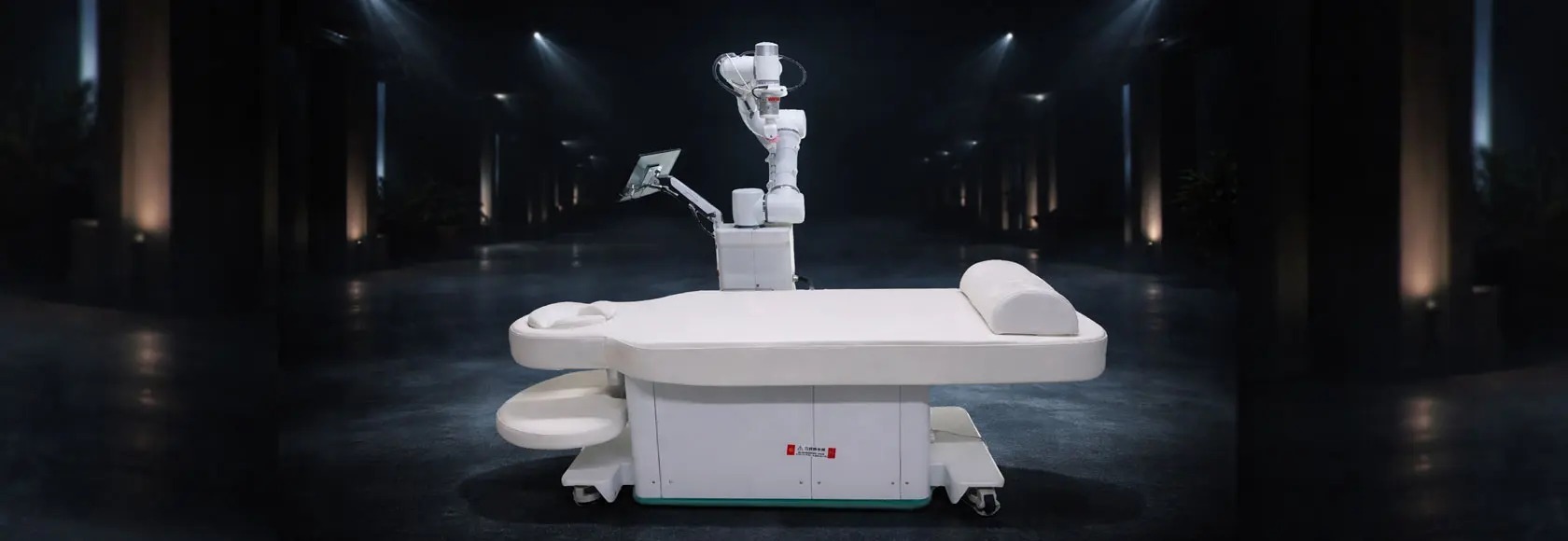
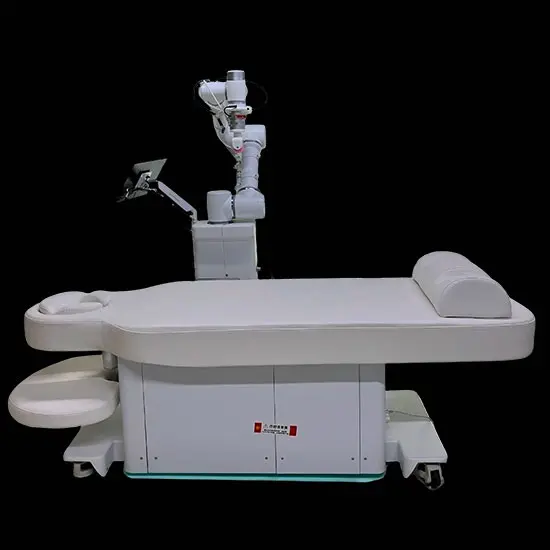
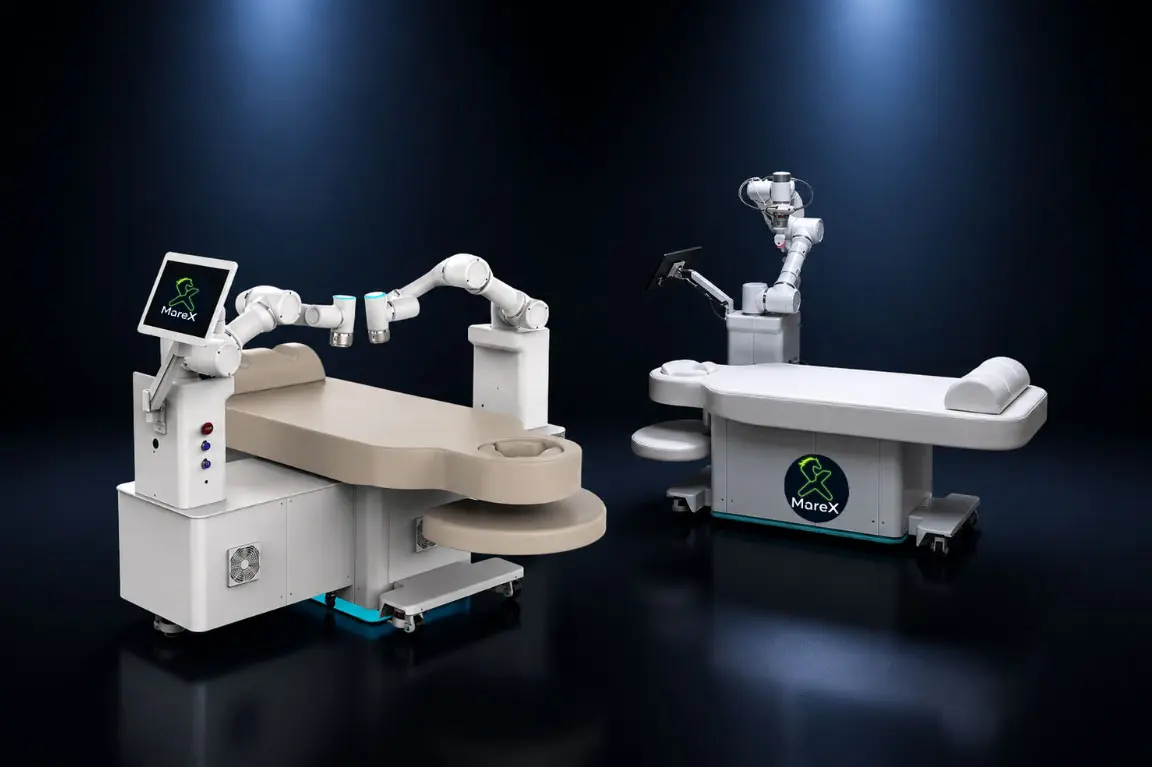
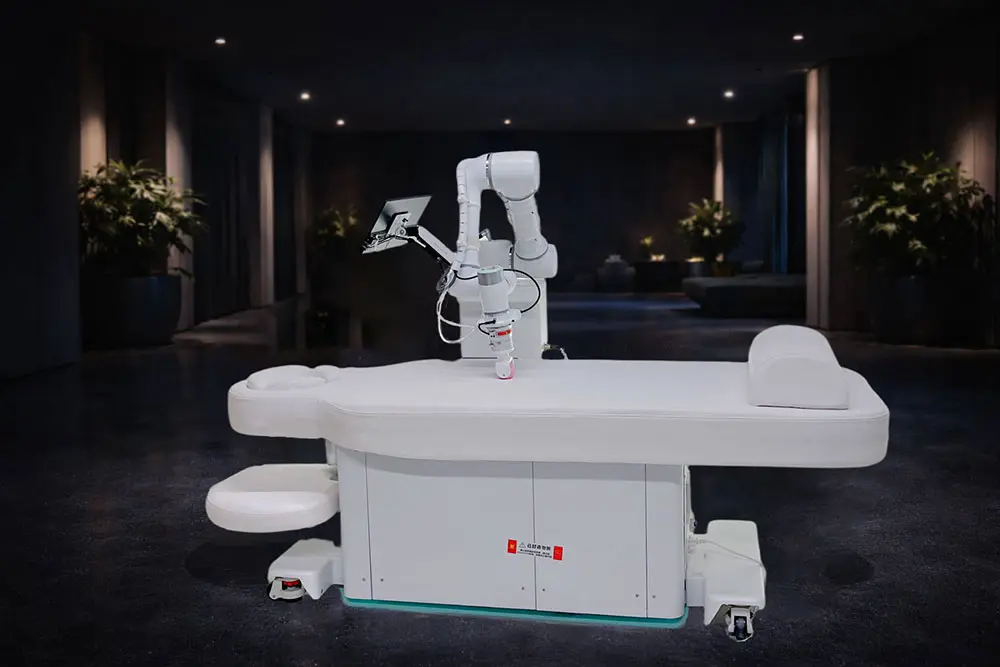
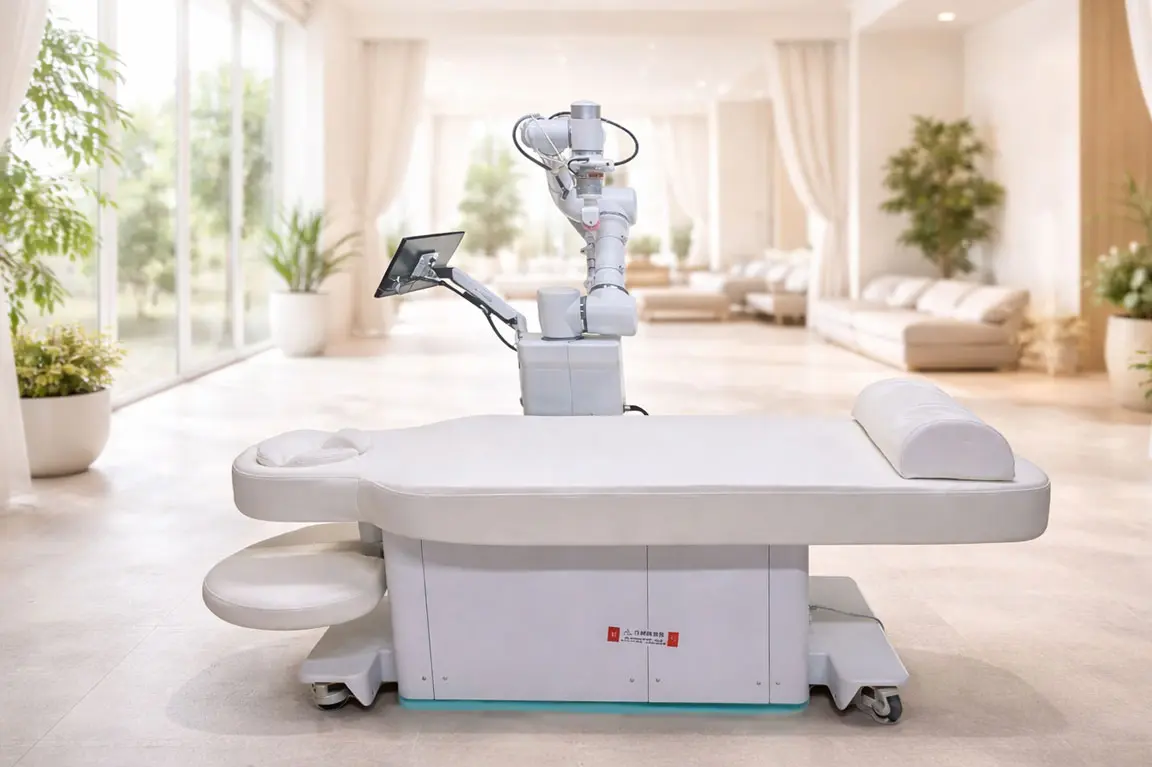
Following the remarkable success of the single-arm massage robot at MEDICA 2025 in Düsseldorf, which solidified market trust with its mature precision force-control technology, MareX is not resting on its laurels. Leveraging profound feedback from the exhibition and ongoing R&D, we are steering towards the next frontier: the global debut of our next-generation Dual-Arm AI Massage Robot at WHX Miami in June 2026, poised to pioneer a new paradigm of “human-robot collaborative” therapy.

This evolution is far from a mere mechanical addition; it is a systematic innovation driven by market intelligence. In high-demand settings such as luxury hotels and premium fitness studios, where efficiency and experience are paramount, single-arm systems, while professional, encounter physical limits in coverage and technique complexity. The new dual-arm robot is engineered to break these constraints. Its breakthrough lies in the intelligent dual-arm coordination system, enabling the arms to work in tandem like two synchronized therapists. They can simultaneously address different zones of the user’s back, significantly enhancing service throughput, or execute combined techniques like pressing and kneading for an unprecedented, lifelike therapeutic experience, taking inspiration from industry pioneers in redefining user engagement.

Sensor Customization 3 axis Torque

Crucially, we understand the imperative of commercial viability. Therefore, while reaching new technical heights, this generation is committed to delivering disruptive value. Through innovative engineering and supply chain optimization, we have achieved a revolutionary cost structure for integrating advanced technologies like dual-arm coordination and multi-sensor fusion. Our goal is to empower a broader range of wellness service providers with multiplied capabilities at a rational investment level. Furthermore, the modular ecosystem of professional massage heads allows one device to adapt seamlessly among modes such as deep tissue release, post-workout recovery, and general relaxation, maximizing both application versatility and return on investment.

From Germany to Miami, from the proven reliability of our single-arm system to the forthcoming dual-arm flagship set to redefine market expectations, MareX’s trajectory is clear and steadfast. Anchored by our core competency in “Precise Perception,” we are dedicated to continuously iterating technology that delivers effective health solutions to the global market with ever-greater efficiency and accessibility. Miami will be more than a launch; it will be a declaration of the future of intelligent therapy.

Stay tuned to MareX and join us in exploring the future of intelligent health.

MareX AI Massage Robot Shines at MEDICA 2025 in Germany, Leading the New Experience of Precision Physiotherapy

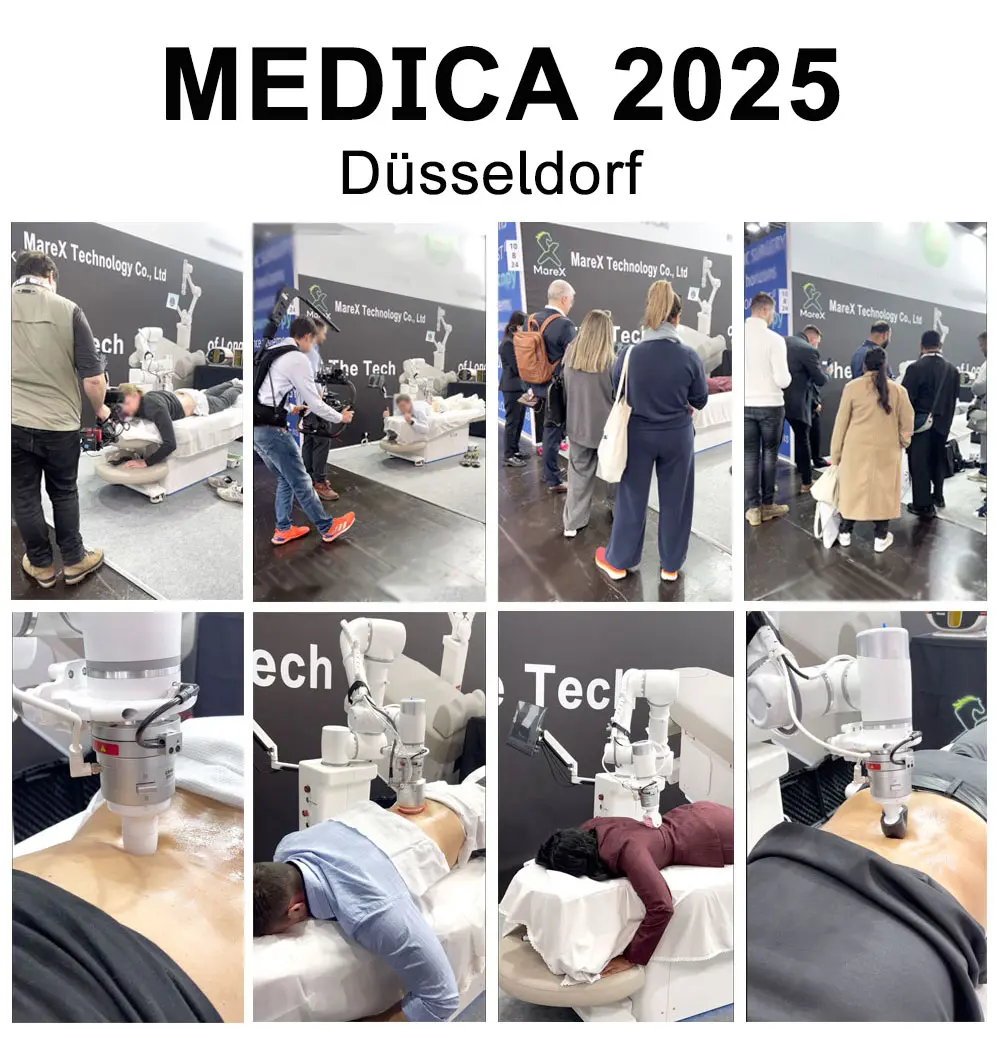
On November 17, 2025, the world’s premier medical trade fair—MEDICA 2025 in Düsseldorf, Germany—kicked off. At this event, the AI massage robot presented by MareX became one of the highlights, drawing a steady stream of professional visitors to its booth for hands-on experiences and generating significant cooperative interest.

Many clients who tried the MareX AI massage robot were impressed by its precise massage and intelligent feedback. The core of this performance lies in MareX’s independently developed six-axis force sensor technology. Acting as the “nerve endings” of the robot, this sensor can perceive and adjust the applied force in real-time, ensuring “constant force and constant speed” with each movement. It effectively soothes muscle soreness while avoiding discomfort caused by improper pressure.

Our robot is more than just a device; it integrates traditional wisdom with modern technology. Utilizing three-axis reconstruction acupoint recognition technology, it can accurately locate back acupoints as if it had “intelligent eyes.” Guided by the six-axis force sensor, its simulated massage heads (such as the elbow and one-finger Zen types) flexibly mimic the techniques of a professional therapist, precisely loosening deep muscle knots and solving the challenge of controlling force and angle in traditional massage.

The versatile application scenarios of the MareX robot—from TCM clinics and elderly care centers to sports rehabilitation and home offices—were fully demonstrated at MEDICA. Many clients from diverse fields recognized its potential application in their specific professional settings.

The successful conclusion of MEDICA 2025 marks a brand new beginning. The enthusiastic on-site experiences and active inquiries have given us tremendous confidence. MareX will continue to delve deeply into the field of intelligent physiotherapy, adhering to the core values of “Innovation, Quality, and Service,” to bring a better health experience to more users worldwide.

Stay tuned to MareX and join us in exploring the future of intelligent health.

Precise force control + intelligent techniques: MareX massage robot leads a new direction in intelligent physiotherapy

In today’s fast-paced life, sub-health issues, like a dark cloud, quietly envelop people of all ages. Under the lights of office buildings late at night, office workers rub their stiff shoulders and necks, trying to relieve fatigue; long lines at community hospitals are filled with elderly people hoping to alleviate their discomfort through physiotherapy; outside gyms, young people who have just finished exercising are also suffering from back pain. As sub-health becomes a collective problem of our time, the demand for convenient and effective physiotherapy services grows rapidly and urgently, like new shoots breaking through the soil in spring.

Against this backdrop, technology empowering health has become the key to breaking the deadlock, and the synergistic development of robotics and sensor technologies injects core momentum into the upgrading of intelligent physiotherapy equipment. Shenzhen MareX Technology Co., Ltd. is a pioneer in this field, focusing on “precise perception” and “intelligent services.”

MareX is rooted in Shenzhen, a fertile ground for innovation. As a technology-driven company, its business encompasses high-performance sensor supply, R&D design, and intelligent solutions, forming a complete closed loop of technical services. The company highly values independent innovation, possessing 3 invention patents and over 20 other patents, and has passed authoritative domestic and international quality certifications. Simultaneously, MareX has established long-term strategic partnerships with renowned institutions such as the Chinese Academy of Sciences, Zhejiang University, and Harbin Institute of Technology, forming a deeply integrated innovation ecosystem of industry, academia, and research. Guided by the core values of “innovation, quality, and service,” MareX is always customer-oriented, deeply cultivating the fields of sensor technology and intelligent robots, developing a six-axis force sensor and the MareX massage robot, and committed to transforming technological accumulation into practical health solutions.

Six-axis Force Sensors: the precise “nerve center” of perception.

The reason why MareX Intelligent Physiotherapy Equipment stands out among many similar products is largely due to its core technology – the independently developed six-axis force sensor. This precision device, like the “nerve endings” of a robot, can simultaneously and accurately measure forces and torques in three directions. Even in complex and changing environments, it can maintain stable performance and achieve “constant force and constant speed, precise perception”.

Taking massage as an example, throughout the massage process, the sensor can monitor changes in muscle force in real time. When muscles “protest” due to uneven force, it can quickly capture these signals and adjust accordingly to ensure that the massage intensity is always just right, conforming to the body’s tolerance, and avoiding discomfort caused to the user due to insufficient intensity. This precise “sensory ability” is a key factor that allows intelligent physiotherapy to surpass traditional equipment, providing a solid underlying technological guarantee for the precise operation of the robot.

MareX Intelligent Massage Robot : An Innovative Engine for Smart Therapy , Integrating Tradition and Modernity

Based on the technology of six-axis force sensors, the MareX Intelligent Massage Robot integrates ancient wisdom with modern technology. It deeply explores and inherits the essence of physical therapy such as traditional Chinese massage , while cleverly utilizing six-axis force sensing and three-axis reconstruction acupoint recognition technology to achieve the remarkable effect of “intelligent meridian convergence and precise positioning”.

While at work, the robot seems to possess a pair of intelligent “eyes,” accurately identifying the distribution of acupoints on the back through 3D reconstruction technology, much like precisely marking each destination on a map. Its flexible “hands,” guided in real-time by six-axis force sensors, can precisely and flexibly adjust the angle and intensity of force application based on the characteristics of different acupoints and the body’s feedback. In particular, the elbow massage head and the one-finger massage head fully utilize the advantages of the six-axis force sensors, simulating the force exerted by a real elbow and fingers to precisely loosen deep muscle knots. The control of its force and angle is as precise as if performed by a professional therapist, a feat unmatched by most similar products on the market, truly solving the problem of precise control of force and angle in traditional massage.

In addition, the robot is equipped with modules such as rollers and roller-type heat therapy heads. These multiple modules work together to achieve “multi-axis linkage, precise reproduction” of the complex techniques of manual massage. The roller module acts like a professional masseur, using rolling and pressure to deeply stimulate deep muscles, like giving tired muscles a deep spa treatment, relieving lactic acid buildup after exercise. The roller-type heat therapy head cleverly combines heat with physical massage, promoting blood circulation and accelerating product absorption with the aid of heat. Combined with the “Hello MareX” voice interaction function, users feel as if they have a personal smart assistant. They can easily issue commands to adjust parameters such as intensity, speed, and temperature at any time, achieving “hands-free” intelligent control and making the treatment process more convenient and comfortable.

Meanwhile, the MareX intelligent massage robot also incorporates traditional Chinese medicine therapies such as moxibustion and heat therapy. After accurately locating acupoints, it can accurately act on the target acupoint area, whether it is the transmission of warm energy during moxibustion or the penetration of heat during heat therapy, further enriching the therapy methods and meeting the diverse needs of users.

Adaptable to diverse scenarios: A practitioner of comprehensive health care

From professional physiotherapy in traditional Chinese medicine clinics to daily health care in nursing homes, from post-operative recovery in sports rehabilitation centers to body treatments in beauty salons, the MareX massage robot meets the health needs of different groups thanks to its adaptability to various scenarios. For working professionals, it’s a convenient “relaxation tool” that can be used both in the office and at home; for sports enthusiasts, it’s a “rehabilitation assistant” that quickly relieves muscle soreness; and for the elderly, it’s a readily available “family therapist.” This versatility vividly embodies its philosophy of “empowering health with technology.”

Leveraging its continuous breakthroughs and innovations in sensor technology and the profound advantages accumulated through industry-academia-research collaboration, MareX is steadily and practically moving from “precise sensing” to a new stage of “intelligent physiotherapy.” In the future, MareX Sensing will continue to be guided by “MareX Power,” deeply cultivating the field of intelligent physiotherapy, constantly exploring new technologies, developing new applications, and creating new value. It aims to pave new directions for the development of the intelligent physiotherapy industry, bringing people a better, more efficient, and convenient health experience, and making the dream of a healthy life a reality with the help of technology.

Common Challenges in Multi-Axis Force Measurement – And How to Solve Them

A robotic arm in a clean room applies too much force, cracking a solar wafer. A collaborative robot in assembly feels sluggish, its reactions just slightly off. The source isn’t the code. It’s the force sensor. The system’s sense of touch is flawed. These aren’t malfunctions. They are mismatches. The silent language of force feedback is speaking gibberish, and the machine obeys.

The Core Challenge: It’s Not a Sensor, It’s a Compromise

You buy a multi-axis force sensor for a reason: precision. Yet, you face a trio of relentless problems that undermine that goal. They are technical, yes, but their impact is purely practical: wasted time, scrap, and underperformance.

Crosstalk: The Data You Didn’t Ask For

Apply pure downward force. The Z-axis reads correctly. But the Y-axis also shows a slight signal. That’s crosstalk. Force from one direction leaks into another. Your controller receives a lie. It tries to compensate, introducing new errors. The result? A machine that fumbles its task. A grinding tool that wobbles. A prosthetic grip that feels unnatural. Standard sensors tolerate a crosstalk spec of 2-5%. In micron-level work, that’s a canyon of error.

Environmental Sabotage

Your factory floor is the enemy. Vibration from conveyors. Temperature swings from welding. Electromagnetic noise from drives. These aren’t nuisances. They are signal assassins. A sensor calibrated in a lab can drift wildly when bolted next to a stamping press. The data becomes noisy, unstable, and useless. You don’t need a sensor. You need a sensor built for your specific warzone.

The Physical Integration Headache

Found the perfect sensor. Right capacity. Perfect accuracy. Now install it. The bolt pattern doesn’t match. The connector faces the wrong way. The output is an analog voltage, but your system only reads digital EtherCAT. The project halts. You’re now redesigning mounting brackets, adding signal converters, and creating new failure points. The “solution” creates three new problems.

Solving It: The Custom-Fit Philosophy

Fixing this requires a different mindset. Stop shopping for a component. Start engineering a measurement node. The solution is specificity.

Buy 3 axis Force Sensor Online

Designing Out Crosstalk at the Source

Fighting crosstalk with software filters is a band-aid. The fix is physical and fundamental. It requires a sensing element designed with decoupling as the first principle. Think of it as architectural isolation for strain gauges. Advanced designs use unique grid patterns and monolithic structures to ensure force directed on the X-axis stays reported on the X-axis. The goal is a crosstalk specification under 1%. Clarity by design, not correction.

Engineering for the Environment, Not Against It

You combat environmental noise by building a fortress, not a fence. This means:

  • Material Science: Selecting alloy cores with near-zero thermal expansion for the sensing element itself.
  • Absolute Sealing: Hermetic welds that protect the internal electronics from humidity, coolant, and dust permanently.
  • Active Shielding: Built-in filtering that targets the specific EMI frequencies of industrial motors.

The sensor must be born from your environment’s harsh reality.

Integration as the Starting Point

This is where true customization changes everything. The mechanical and electrical interface should not be an afterthought. It is the primary design constraint. A partner who gets this will offer what catalog suppliers cannot:

  • A custom flange that bolts directly to your robot’s wrist interface.
  • A low-profile housing machined to fit inside a surgical tool’s existing cavity.
  • A native Ethernet/IP or PROFINET output from the sensor’s own processor.
  • The machine’s design dictates the sensor’s form. Not the other way around.

From Problem to Precision: Making the Shift

The outcome of this approach is transformative. It moves force measurement from being a variable to being a constant. A foundation. When the data is inherently clean and the fit is physically seamless, the machine’s intelligence can finally act with confidence. That robotic arm doesn’t just avoid breaking the wafer. It can feel the wafer’s presence, its alignment, and handle it with nuanced, adaptive pressure.

This shift starts with a different kind of specification document. Don’t just list the sensor specs you think you need. Document the real-world problem.

  1. Describe the exact forces, both expected and potential overload.
  2. Map the environmental attackers: temperature range, vibration sources, and wash-down procedures.
  3. Define the mechanical and electrical space: share the 3D model of the assembly, and list the communication protocols your controller understands.

That document isn’t a purchase order. It’s an invitation to solve the problem correctly.

Where does your current system’s “sense of touch” fall short? Identifying that precise gap is the first step toward building a solution that doesn’t just measure, but truly understands.

MareX engineers begin with that question. The blueprint follows.

What Is Force Control Technology? How Multi-Axis Sensors Enable Smarter Robotics

The real breakthrough in robotics today isn’t about stronger arms. It’s about smarter fingertips. The quiet shift from robots that just move to robots that can genuinely feel and interact is reshaping automation. This change is driven by force control technology, with multi-axis force sensors as its essential core. Let’s look at how this works and why it matters now.

Understanding Force Control Clearly

Force control technology gives a machine a sense of touch and the ability to respond. Imagine wiping a table. Hand, thou dost feel the pressure, and it keeps adjusting. Your brain processes feedback from your nerves in a continuous loop.

That’s force control for a robot. It’s a real-time cycle:

  1. A sensor measures the force of interaction.
  2. A controller compares this to a target force.
  3. The robot’s motors instantly adjust.

This creates adaptability. A robot without it is blind to contact. It rigidly follows its path. If something is misaligned, it jams or pushes harder, causing damage. Force control allows the robot to yield and handle real-world variability.

Why One-Dimensional Sensing Falls Short

To see the value of multi-axis sensors, consider their simpler predecessor. A single-axis load cell measures force along one straight line. It can tell you a robot is pushing down with 10 newtons. But what if it’s also pushing sideways? That sensor is blind to the lateral force.

Real-world tasks are messy and three-dimensional. They involve combined motions. Think about screwing in a lightbulb. You apply both downward force and rotational twist. A single-axis sensor gives an incomplete picture. This limitation forces engineers to design overly precise, expensive fixtures to eliminate all variability. It’s a rigid and fragile way to build automation.

The Multi-Axis Sensor: A Complete Tactile Picture

This is where multi-axis force/torque sensors change the game. A typical 6-axis sensor is the foundation for true force control. It does not quantify only one thing. It dissects the whole physical interaction by making simultaneous measurements:

  • Forces (Fx, Fy, Fz): Push and pull along the X, Y, and Z axes.
  • Torques (Tx, Ty, Tz): Twist, turn, and tilt around those axes.

This small sensor should be mounted on the wrist between the end-effector and the gripper or tool of the robot. You have just given the machine the feel of a fine touch on the very end of the fingertips. Now it knows not only how difficult it is pressing, but also the direction and the kind of twist. This entire stream of data opens up new possibilities.

Customized 6-Axis Force Sensor

Real Applications This Technology Enables

This full-spectrum force data makes specific, valuable tasks possible and reliable.

Precision Assembly and Insertion. This is the famous “peg-in-a-hole” challenge. It applies to inserting connectors, placing circuit boards, or assembling gears. With multi-axis feedback, the robot feels the initial contact and the subtle guiding forces as parts align. It can execute a gentle spiral search to seat a component perfectly, preventing jams and damage.

Adaptive Surface Finishing. Tasks like polishing, grinding, or deburring is terrible for traditional robots. Any variation in the part ruins the finish. With a multi-axis sensor maintaining a set contact force, the robot automatically adjusts its path to follow the object’s contour. This delivers consistent quality and reduces tool wear without needing perfect part positioning.

True Human-Robot Collaboration. Safety lasers can stop a robot when a human is nearby. Force control allows for fluid interaction. With multi-axis sensing, a collaborative robot can feel a human physically guiding its arm for easy programming. It can also detect unexpected contact from any angle and stop immediately, enabling safer shared workspaces.

Objective Quality Testing. What is the method of determining the snap-fit of a plastic lid or the screw torque? A multi-axis sensor on a robot is capable of repeating the action of a human tester and recording the precise force profile. Any discrepancy between the right profile raises an alert of a possible flaw, which gives stability in quality control based on data.

Implementation: It’s a System, Not Just a Part

A key lesson is that a multi-axis sensor is not a simple plug-and-play component. Success requires treating it as part of an integrated force control system.

Sensor placement is critical. Mounting it closer to the tool improves accuracy. The data stream is set to be high speed; therefore, it requires filtering in order to eliminate electrical noise. Control software parameters should be well-adjusted to a certain task. How fast and violent is the correction of the robot? It is also important to collaborate with a provider who knows the full integration process to avoid having unstable systems and deliver the promised results.

Evolving From Reaction to Prediction

The path forward is clear. As robots operate in less structured environments, force control transitions from a specialty to a necessity. The next evolution will merge this rich force data with machine learning. Robots will begin to learn from tactile experience, predicting the best way to handle new objects and recognizing the force signature of a successful operation.

This future of responsive, intelligent automation is built on precise, multi-dimensional sensing. The machines are gaining a sense of touch. That simple change is making them capable of far more complex and valuable work.

To see how tailored force sensing can solve specific automation challenges, the engineering team at MareX can provide insights. Their work focuses on the precise sensor technology that enables this intelligent interaction.