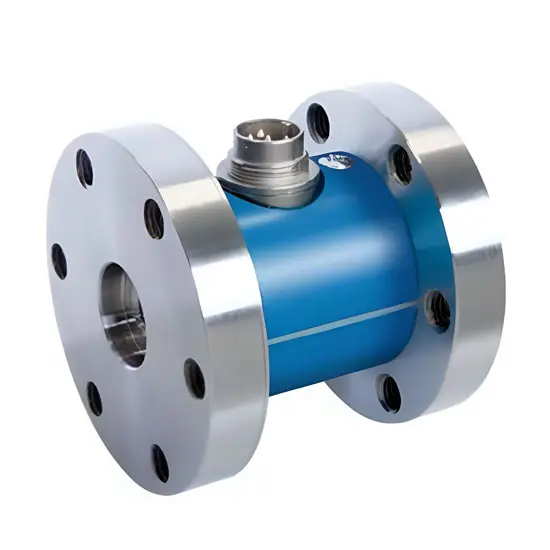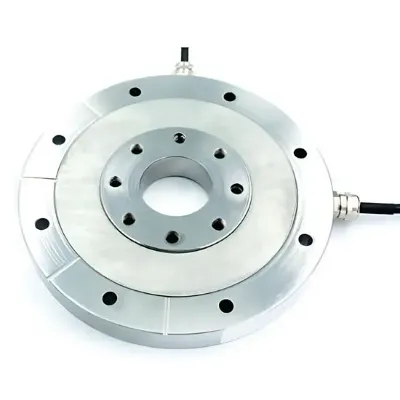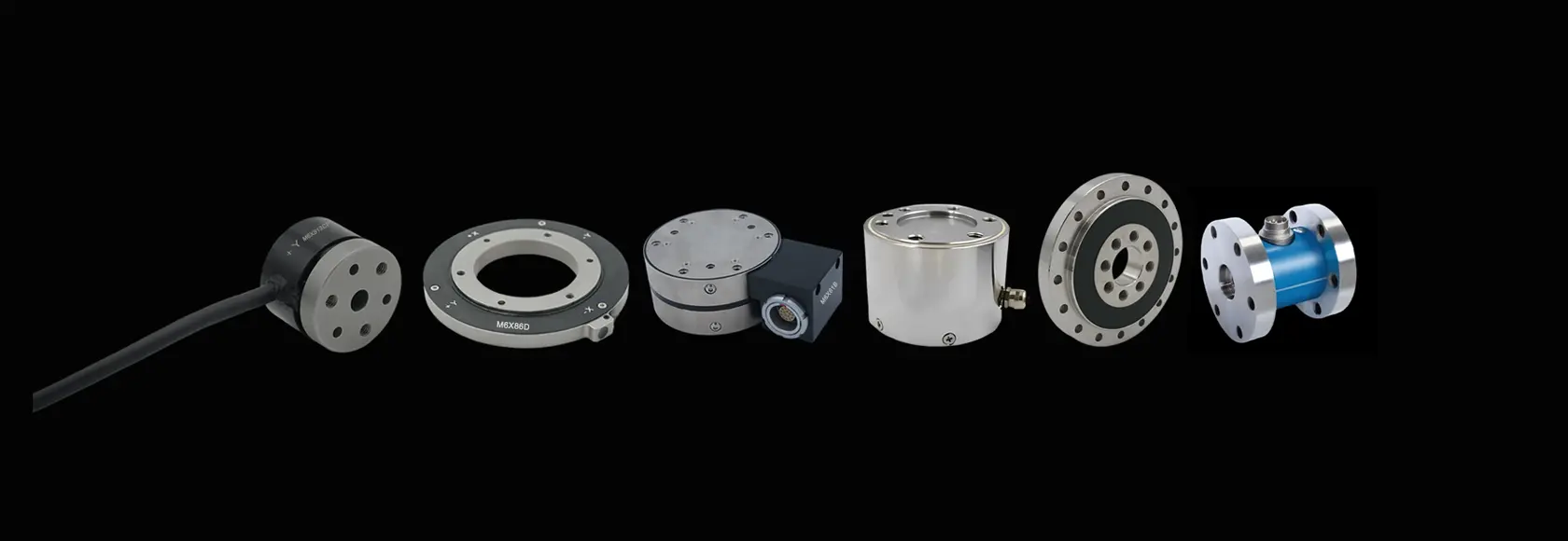
How Force and Torque Sensors Improve Industrial Automation Efficiency

Introduction

In the advanced sensing technology industry, MareX custom sensors emphasize the growing need for automation in mass industrial scaling and maintaining optimal automation systems. Automation requires mass industrial scaling for distribution, but it also demands manufacturers leverage competitors in automation, accuracy, and productivity. Within MareX sensors, the automation industry is demanding the capabilities offered by MareX of forcing and torque sensors, heightening productivity and accuracy across automation systems.

Understanding Force and Torque Sensors in Automation

The automation systems utilize force and torque sensors in the robotics systems of industrial automation. Total task performance and system implementation are reliant upon a robotics systems adaptability and safety. Industrial automation demands the force and torque sensors in quality control, testing, material handling, and assembly.

Automation system manufacturers incorporating multi axis force torque sensors will capture force data across multiple axes and across a number of dimensions. A direct example is the 6 axis configurations capturing force and torque data across the X, Y, and Z axes and allowing for more ample configurations. The innovation demands radical flexibility and accuracy across the robotics of automation.

Enhancing Precision and Operational Efficiency

Force and torque sensors enable innovation across industry, automation systems, and mass production. Precise control of robotic automation systems drives innovation in task performance.
Tasks like carving and assembling are autonomous, without operators, but innovation has afforded automation systems the same flexibility and adaptability across multiple tasks including the bolts in construction and the various delicate components and surfaces.

Machines equipped with torque sensors are able to perform at the same or even better level of the competitor as the human worker in any task, along with improved efficiency with eliminated unnecessary steps in a process.

For an industry looking to buy custom sensors online, accurate selection assures a desired outcome that produces a consistent level of output with reduced error and a maximized throughput of productive cycles overall.

Role of Multi-Axis Sensors in Advanced Automation

Increasingly, multi axis force sensor online are used in most advanced automation systems as opposed to single axis sensors because multi axis sensors are more complete in providing an omni-directional visualization of the force that is acting on a component, and most importantly, unlike single sensors, are able to provide the multi axis systems the required

High-level automation functions require multi-axis sensors and specialized multi-axis sensor systems to perform most of the dynamic functions involved in a task.

For example, multi-axis sensors in robotic assembly detect misaligned parts and adjust movements accordingly, and they maintain and control applied force in grinding, welding, polishing, and similar processes to ensure a consistent level and prevent damage.

As a joint torque sensor manufacturer, MareX constructs and manufactures sensors that integrate directly into robotic joint assemblies, and these sensors enable engineers to optimize how systems apply torque while they achieve more advanced and better-integrated control over motion and design during assembly. This becomes especially important in collaborative robots (cobots), where engineers design systems to deliver highly responsive, finely tuned control that closely matches the desired end-level performance and overall control outcomes.

Improving Safety in Industrial Environments

Force and torque sensors primarily enhance safety in automation environments where humans interact with robotic systems, especially when robotic structures operate against applied forces within integrated, controlled, and responsive assemblies.

By developing more advanced systems that have a limited design for the level of control as to the desired end control, as well as for the overall design and the structure of the robotic structure as far as the force and control of the design to control the overall system structure of the robotic system as far as the force implemented to control the overall safety of the system, control, and functional level, the systems can improve their overall structural integrity and overall functioning level close to the desired end control or functioning level of the robotic system close to the desired end goal of the desired end control or functional level of the integrated and improved overall level of control to provide integrated and improved systems.

Boosting Quality Control and Consistency

Quality assurance becomes a straightforward task with force and torque sensors, as consistency is an aspect of manufacturing that is crucial. These sensors allow automated systems to carry out commands with utmost precision, and as such work wonderfully in manufacturing and inspection quality.

As a case in point, sensors are able to gauge the force needed to perform a button press or how durable a component is over a number of repeated cycles. This is done to ensure that a product is born to meet all the necessary quality requirements before being sold on the market.

A notable torque sensor manufacturer such as MareX are able to give businesses the means to create, and in turn, maintain quality consistency as well as lessen the load of manual inspection.

Custom Sensor Manufacturing for Specialized Applications

There are many different needs in a multitude of different industries, and that is why a more universal technology is applied. In such a case, custom sensor manufacturing is an absolute necessity.

MareX is experienced in manufacturing sensors that deal with particular needs such as extreme temperatures, high levels of vibrations, as well as high complexity. This is why custom sensors are leaps and bounds better in terms of functionality and performance as compared to out of box sensors.

Forms of businesses that are looking to buy custom sensors online, are customs designs that correlate seamlessly with their automation systems and provide ease of access, functionality, and, most importantly, a cost-effective solution.

Enabling Smart Manufacturing and Industry 4.0

The evolution of Industry 4.0 places more importance on interconnected and intelligent systems. Force and torque sensors provide real-time information that can be analyzed for advanced decision making.

Sensors provide early detection so failures can be avoided and optimized processes are better understood.

Increased productivity and profitability in automated environments are a result of the use of force and torque sensing in robotic processes, such as grinding, polishing and assembly.

MareX is a custom industrial sensor supplier that partners with industries leveraging innovative sensor technologies to usher in a new level of smart manufacturing practices.

Applications Across Industries

Force and torque sensors are applicable in a multitude of industries:

  • Robotics: Increasing accuracy of robotic arms and collaborative robots
  • Automotive: Ensuring correct torque distribution in assembly lines
  • Aerospace: Assisting with precision testing and operations that are safety-critical
  • Manufacturing: Enhancing the effectiveness of quality control
  • Research & Development: Facilitating precise testing

Selecting a torque sensor manufacturer allows for competent solutions in industrial processes that are modern and evolving.

Why Choose MareX Technology Co., Ltd

MareX Technology Co., Ltd is a recognized leader in advanced sensing solutions, specializing in custom sensor development. Multi axis force torque sensor systems and high performance sensors are among their extensive product offerings.

MareX specializes in innovative and precise design, ensuring high-quality products tailored to the client’s needs. Expect nothing less than the most durable and efficient products when selecting a custom sensor online.

Conclusion

Force and torque sensors are revolutionizing industrial automation by increasing the precision, safety, and efficiency of automation. These sensors are enabling machines to work smarter and more effectively from multi axis force sensor online solutions to other advanced custom solutions.

As the industrial world continues to develop, so does the need for reliable high performance sensors sensing solutions. Working with a reputable custom industrial sensor supplier such as MareX Technology Co., Ltd, ensures the most advanced solutions for maximizing industrial automation with productivity and creativity.

Selecting the appropriate sensor solutions provides the foundation for a more intelligent, safe, and efficient automation system of the future.
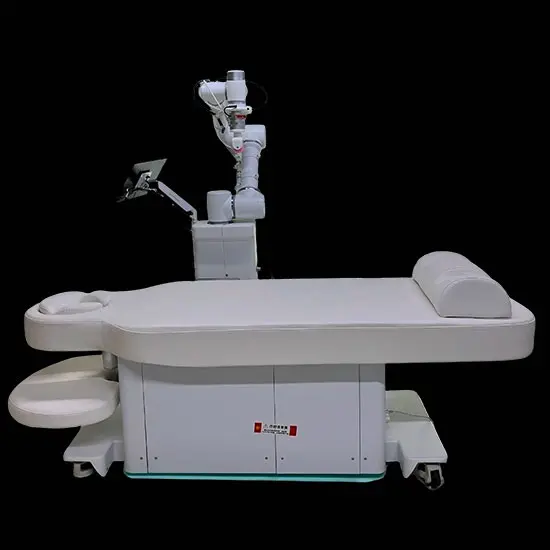
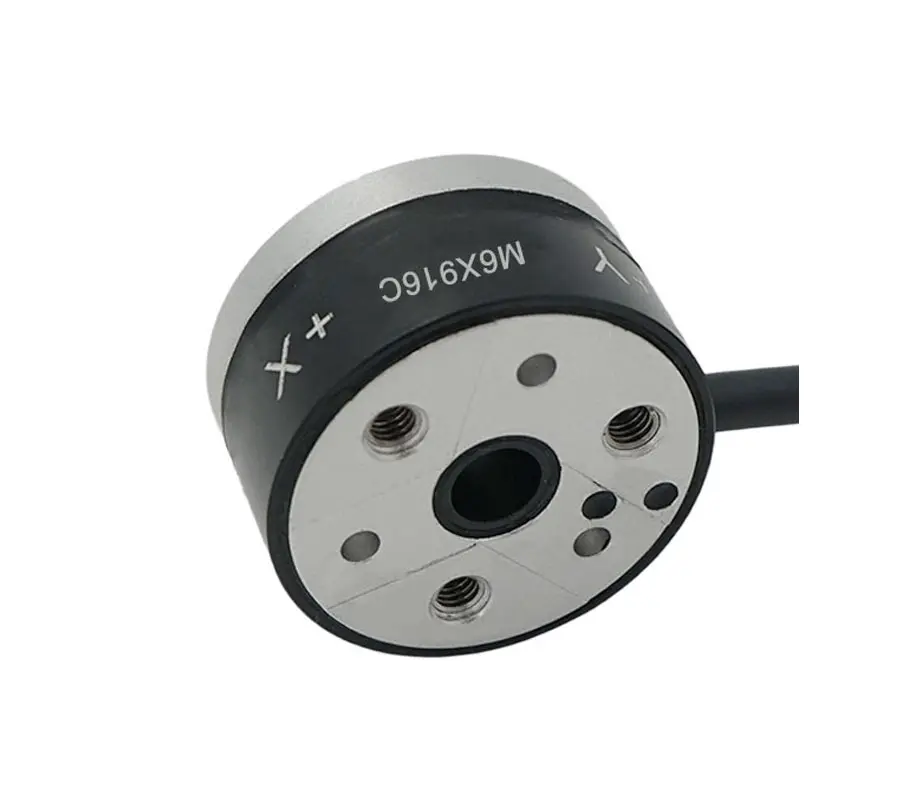
Robotics has progressed beyond simple repetitive processes to systems that can think, adjust, and make decisions on the fly. One of the key elements to this evolution is superior sensing technology, and, more specifically, the multi axis force torque sensor. These sensors allow robots to engage and manipulate their environments. As high-performance sensing systems are introduced to industrial automation and collaborative robotics, the overall capability of machines is transformed.

In this piece, we highlight the key advantages that multi-axis force sensors provide to the fields of robotics and the contributions made to overall performance, operational efficiency, and reliability.

multi axis force torque sensor

Multi-Axis Force Sensors in Robotics explained

A multi axis force torque sensor detects multiple axial forces (Fx, Fy, Fz) and multiple axial torques (Mx, My, Mz), and does so at the same time. It can do this in contrast to older sensors that only capture one dimension. These sensors enable the user to better understand how forces work and are utilized in the real world.

This is extremely valuable in the robotics field, where linear movements are the exception. Robots require sophisticated and precise multi-directional feedback in order to complete any of their tasks—gripping, lifting, assembling, polishing, and many more.

1. Greater Precision and Control

Robotics is especially susceptible to the positive impacts that multi-axis sensors provide, and the ability to improve operational precision is the most paramount. Robotic movements can be adjusted in real time to address situational demands.

One specific example is the integration of robot joint torque sensors into robot arms. These sensors monitor and regulate the amount of torque that is applied to each joint. As a result, the movement is made smoother, and the overall system performance is elevated. In instances where the robotics application is medical robotics or electronics assembly, the absence of precision can result in the occurrence of a defect—illustrating the necessity of precision sensing.

2. Enhancing Force Feedback for Smart Options

Modern sensors for robotic control systems allow robots to “feel” environmental changes. Using a multi-axis force torque sensor helps robots make smart decisions by measuring and reporting a combination of forces and torques.

Force sensors are particularly good for:

  • Robotic gripping and handling
  • Surface finishing and polishing
  • Human-robot collaboration

With precise engineering, robots can detect slip, respond to counter force, and alter grip strength like a human.

3. Robotic Operations Safety

Safety in a robotic working environment, especially one that combines human and robotic interaction, is a primary concern. Police multi-axis force sensors to detect contact or forces that exceed prescribed parameters and trigger a response.

In robotic application, the sensors:

  • Trigger a stop in the event of an unforeseen impact
  • Minimize the chance of damaging the facilities
  • Create a safe working environment in collaborative robotics (cobots)

By measuring and controlling forces in the environment, the robots act quickly to keep the working environment safe and mechanized.

4. Wide Range of Applications

One of the greatest advantages of multi-axis sensors is the ability to be used in a variety of applications. One multi axis force torque sensor can be used for numerous applications, eliminating the need for numerous sensing devices.

The following industries have a need for such sensors:

  • Automotive
  • Aerospace
  • Electronics
  • Materials (testing and quality control)

The ability to measure force in several directions and rotate freely in an unbiased manner is ideal for applications that are versatile and require a very high degree of precision and flexibility.

5. Optimized Performance in Robotic End-Effectors

Good functioning end-effectors like grippers or tools require precise force data, which multi-axis sensors feedback to improve end-effectors usage.

For example, when robots perform tasks such as assembling, to avoid errors and improve quality of the product with less wastage the sensor enables the robot to use just the exact amount of force.

6. Tailored Solutions to Meet Individual Needs of Applications

With the unique nature of every robotic process, the necessity of custom sensor manufacturing comes in as standard sensors cannot cater to the specific demands of intricate mechanisms.

MareX excels in the development and design of custom sensors in accordance with the specific needs of the customer. Whether it concerns load capacity, dimensions, or type of output, bespoke solutions promote energy and performance.

The aforementioned, means businesses can be able to:

  • Reduce operational cost
  • Enhance precision in the performance of intricate operations

7. Instant Data Access for Refined Automation

For smart automation in this Industrial 4.0, instantaneous or real time data availability and multi-axis force torque sensor is essential as they capture data in a formative manner to improve the system.

The data can be put into use through:

  • Predictive maintenance
  • Optimization of process
  • Quality aspects

Therefore, businesses with real-time data can enhance productivity and reduce the time in the systems that are automated.

8. Less Damage to The Machinery

The increase of maintenance of the machinery and damage can be as a result of the impact of excess force or the misuse of the torques. By keeping the forces effective and safe within the limits, multi-axis sensors minimize such effects.

A robot joint torque sensor in a robot, for example, helps determine and maintain an optimal torque level for a robotic joint. In doing so, the sensor helps decrease the amount of mechanical stress on the entire system, and as a result, also increases the overall lifetime of the robotic system. Improving reliability also lowers the overall operational costs in the long run.

9. Seamless Integration with Modern Robotic Systems

New robotics need new means in which they can create sensors that can provide a better way of working with many other new technologies. Multi-axis force sensors can provide the technologies that can be compatible with the other controllers.

New technologies that create new working controllers with new designs that allow new technologies can be used in the following:

  • Robotic arms
  • Automated production lines
  • Testing equipment

Upgrading a system can be done in a way that the business can not have to replace the system as a result of the flexibility.

Why Choose MareX for Multi-axis Force Sensors?

MareX is a trusted provider and has relied on other technologies to provide composite sensors that have become a standard in robotics and automation, and provide a sensor system for robotics and automation that is multi-axis force torque sensor system. With their sensors being one of the most advanced technologies, MareX has sensors that are:

  • Highly accurate and reliable
  • Customizable in order to add to many new technologies
  • Constructed of many of the same revolutionized raw materials that allow great sensor construction

Whether a robot joint torque sensor or other advanced sensors for robotic control systems is needed, MareX provides the robotics industry’s best.

Conclusion

Today, the use of multi-axis force sensors in robotics is the key to safety, efficiency, and reliability in the automation industry. They are critical for modern automation and now provide the control and decision-making process of intelligent automation.

The added benefit of custom sensor manufacturing allows companies to develop solutions that best meet their needs and guarantee maximum application performance. The evolution of robotics will increase the need for sophisticated sensing solutions such as the multi-axis force torque sensor.

Automation and robotics are highly competitive fields. MareX’s reliable solutions will allow businesses to maintain a competitive edge and access higher levels of innovation and efficiency.

To ensure commensurate precision and safety within a tremendous variety of use cases, modern industries require high-performance sensors. Force and torque sensors are crucial components in robotics, automation, aerospace, automotive testing, and sophisticated manufacturing systems. For precision and reliable measurement applications, companies look for force and torque sensor providers, such as MareX, who have knowledge and experience of their specific applications.

What do Torque and Force Sensors Mean?

A force and torque sensor is a device that measures the degree of exerted force (push or pull) and torque (rotational force). When these sensors experience mechanical force, they transform the mechanical force into alterable electrical impulses that can be evaluated for the purposes of supervising, regulating, or empirically examining something.

Force magnitude is usually quantized in newtons (N) as torque is in newton meters (Nm). Such precision is always required in robotic arms, production lines, and testing environments.

Custom sensor manufacturing advancements have made it possible to build modern sensors for your specific use case requirements: size; load capacity; environmental sealing (IP66); and type of output signal.

How Does a Force and Torque Sensor Work?

The determining working element of a force and torque sensor is, in most cases, a strain gauge. Here’s a simplified breakdown:

  1. Mechanics of Force Application

When there is force or torque applied to the sensor there is a transient structure change of the sensor which is called slight deformation. However, this deformation is tiny yet it is measurable.

  1. Response of Strain Gauges

The sensor’s strain gauges respond to this deformation. When a structure experiences deformation, the strain gauges respond by altering their electrical resistance.

  1. Conversion of Signals

The change in resistance is converted to an electrical signal. The produced signal is directly proportional to the force/torque applied.

  1. Processing of Data

The signal is processed and calibrated to yield precise measurements, and this information can be used by real-time monitoring, feedback, and control systems.

The sensors offer high performance, and they offer the most information when it comes to accurate measurements, which makes them essential for accurate and reliable measurement in an industry.

What is a Multi Axis Force Torque Sensor?

A Multi Axis Force Torque Sensor is one of the most advanced sensors in the world which measures force and torque in multiple dimensions simultaneously, as opposed to single-axis sensors which only capture measurement along one line and at one rotation point. These measures along the X, Y, and Z and also consider rotational torque about these axes.

These sensors are widely used in robotics, especially in robotic arms and end-effectors that require intricate movements and interactions. Today, multi-axis force sensors are commercially available and are equipped with sophisticated engineering solutions for end-users in these domains.

Primary Benefits

  • The ability to capture several different types of force simultaneously is a major benefit of this sensor.
  • Enhances accuracy on multilayered procedures.
  • Reduces the quantity of required sensors.

Applications of Force and Torque Sensors

Due to the versatility and accuracy, force and torque sensors have a broad range of uses in different industries.

  1. Robotics and Automation

Force feedback from sensors like yours allows robots to do delicate and precise work. Important for things like assembly, material handling and collaborative robotics.

  1. Automotive Industry

Databases used in engine testing, validate steering systems and components for safety and performance.

  1. Aerospace

Helps in the structural testing and simulation to see if the components can withstand excessive forces and extreme conditions.

  1. Manufacturing and Quality Control

During the production processes, sensors keep forces under control to ensure the quality of the final product.

  1. Medical and Biomechanics

Measuring human interaction forces accurately have applications in prosthetics, surgical instruments, and in research.

Importance of High Performance Sensors

With the pace of growing innovation in industries, the demand for high performance sensors is inevitable. Sensors have a direct impact in terms of:

  • High accuracy and repeatability
  • Durability in harsh environments
  • Real-time data monitoring
  • System efficiency
  • Decreased downtimes and reduced errors.

The torque sensors manufacturer you are dealing with should have quality assurance sensors, advanced calibration, and long-term reliability.

Importance of Custom Sensor Manufacturing

Not all applications can be satisfied with standard sensors. Custom sensor manufacturing comes into play in those scenarios. Custom sensors can be designed to meet demands such as:

  • Special shapes and sizes
  • Certain ranges of loads
  • Resistance to specific environmental elements (temperature, moisture, vibration)
  • Specific output signals and integration

At MareX, we engineer bespoke solutions that cater to your operational requirements and deliver in the most difficult conditions.

Choosing the Right Force and Torque Sensor Provider

Selecting a force and torque sensor manufacturer demands certain considerations to facilitate selection of a manufacturer that guarantees reliability and accuracy. Here are a few factors that will influence the choice of a manufacturer:

  • Possibility of Customization: for manufacture of application specific sensors
  • Precision & Calibration: manufacturer offers high accuracy and adequate calibration support
  • Relevant Experience: Practical exposure across several industries
  • Integration: the process to be integrated with existing systems
  • Durability & Quality: The sensors are meant to withstand challenging situations

MareX stands out as a trusted partner, offering innovative solutions backed by engineering expertise and a commitment to quality.

The Multi Axis Sensors: The Future of Sensors

Automation has a growing demand for precise and dynamic measurements. The multi-axis torque and force sensors are critical for the next in demand systems.

These sensors enable machines to possess the ability to “feel” and respond to the environment around them. This ability is particularly important for the following:

  • Collaborative robots (cobots)
  • AI-driven automation
  • Advanced testing systems
  • Smart manufacturing

The widespread availability of Multi axis force sensors for online purchase has made it easier for businesses to incorporate these sensors into their operations.

Conclusion

In today’s engineering world, the force and torque sensors are the backbone of industrial processes. They measure physical forces and convert them into actionable data, which can improve control, increase efficiency, and enhance safety of processes and applications.

Sensors are key parts of almost any system, and their choice can significantly change the system quality and efficiency. You can opt for standard or custom-designed sensors. As a leading manufacturer of torque sensors and multi-axis force torque sensors, MareX provides high-end, efficient solutions to meet your needs.

With rapid changes across various sectors, investing in sensor technologies will be a key enabler of competitiveness and preparedness for the future.

Custom Sensor Manufacturing Expert

The rapid pace of change makes accurate data essential for modern business. And central to the collection of that data are sensors. They measure temperature, pressure, motion and flow among other critical values. These measurements allow machines to run without a hitch and safely. Standard sensors could be purchased for any general scenario, however are not always suitable for each situation. That is where Custom Sensor Manufacturing comes into play.

We believe that no business should have convoluted their systems to conform to dumb sensors; at MareX, we design with adaptability in mind. The sensor is better off designed according to the system’s specific requirements. By partnering with an expert in custom sensor manufacturing, these companies have the opportunity to improve performance, mitigate risk, and create better products.

Understanding the Real Need

Every industry has different challenges. A marine business is handling saltwater and humidity. An industrial plant is exposed to heat, pressure and vibration. Medical equipment as a whole needs exceptional precision and very stringent safety standards. Standardized sensors have more general purpose designs and therefore do not necessarily operate optimally in all environments.

Custom Sensor Manufacturing addresses this issue by designing sensors to meet the specific needs of the job. All of these factors are selected for the sensor based on where it is going to be used and how. Trade-offs are thus rendered moot. A better fit between sensor and application leads to more effective, longer-lasting systems.

Improved Accuracy and Performance

One key reason that companies adopt Custom Sensor Manufacturing is accuracy. Measurement errors amounting to even a few millimeters can lead to system failures, or reduced efficiencies over time. Each sensor is bespoke calibrated for its use. This enhances measurement precision and consistency.

Machines run better when sensors tell the truth. Maintenance can be planned properly. Unexpected breakdowns become less common. In the long run accurate sensing increases overall productivity.

Custom Sensor Manufacturing enables your businesses to have controllable operations. MareX in particular delivers sensors that are stable and maintain reliable readings on their real working conditions.

Stronger Durability

As with most industries, many are working under harsh environments. Poorly designed sensors can take damage from heat, dust, moisture, chemicals and heavy movement. Standard products might not last as long under these conditions.

When working with engineers of custom sensors, they choose sturdy materials and protective designs appropriate to the environment in which the sensor will function. The sensor lifespan is extended and downtime reduced. Keeping a sensor for long will simply save on replacements and maintenance costs.

Durability is a focus at MareX. We build sensors to deal with real-world stress. We strive to develop solutions that are effective under tough circumstances.

Easier Integration

The second major benefit of Custom Sensor Manufacturing is seamless integration. Standard sensors may need additional connectors, adapters or modifications. It also increases installation time and adds cost.

A custom solution has been crafted so that elements were designed from the ground up. All these features are tailored to the customer’s specifications including output types, mounting styles, dimensions and cable lengths. This speeds up and simplifies the installation.

Integration should never be complex with MareX. When properly designed, a custom sensor integrates seamlessly into the system and cuts down on errors and time during manufacturing.

Supporting Innovation

When companies are not constrained by off-the-shelf components then being able to innovate becomes simpler. Custom Sensor Manufacturing Provides Engineers with Greater Freedom to Develop New Products These sensors can then be further miniaturised, reduced in weight or upgraded to meet the needs of contemporary technologies.

Business partnerships with MareX become a significant part of the business development process. We enable design discussions, experimentation, and iteration. This collaboration often reduces development cycles and assists in bringing products to market sooner.

Custom Sensor Manufacturing is more than just creating a product. It means not just supporting creative ideas, but making them a working solution.

Long-Term Cost Benefits

Some companies fear the price tag of custom solutions. It may require a slightly higher initial investment, but Custom Sensor Manufacturing tends to save money in the long run. A well-designed sensor minimizes system alterations, mitigates failures, and reduces maintenance demands.

Reliably functional sensors are minimizing downtime and, in turn, safeguarding productivity. They also decrease warranty claims and service costs. The savings can be substantial over a product’s full life.

Scalability for Growing Businesses

As companies expand, their production demands grow as well. Custom Sensor Manufacturing can support this growth by providing flexible solutions that adapt to changing needs. A professional manufacturing partner plans for both small production runs and large-scale manufacturing. They understand how to maintain consistent quality while increasing output. With the right partner, businesses can scale smoothly without compromising performance, accuracy, or reliability.

At MareX we create processes that scale nicely. So whether a client requires prototypes or thousands of units, we apply the same level of quality and consistency. With changing markets it is important to be flexible, and we ensure our clients are prepared for future growth.

Building a Strong Partnership

Partnering with a Custom Sensor Manufacturing specialist provides technical expertise and assistance. Instead of just selling a product, an effective partner provides value by helping resolve problems and enhance performance.

At MareX, we believe in long-term relationships. We communicate clearly, listen critically, and remain engaged even beyond delivery. When changes are required, we’re quick to respond. A partnership with this approach creates trust and confidence.

Having a trusted manufacturing partner allows businesses to devote more time, energy, and resources on growth and innovation.

Conclusion 

At MareX, Custom Sensor Manufacturing is not a service; it is our way of life. It is a promise to excellence, accuracy, and collaboration.” No two applications are alike, and no client should have anything short of a tailored solution.

Opting for Custom Sensor Manufacturing gives businesses improved accuracy, enhanced durability, seamless integration, and cost-effectiveness in the long run. Even more importantly, they gain a partner who has been through their struggles and partners with them to build trusted solutions.

We proudly serve companies that require high performance and reliable results. From design through production, MareX stands ready to deliver custom sensor solutions that enable your systems to look and perform their best—now and into the future.

What Is Force Control Technology? How Multi-Axis Sensors Enable Smarter Robotics

The real breakthrough in robotics today isn’t about stronger arms. It’s about smarter fingertips. The quiet shift from robots that just move to robots that can genuinely feel and interact is reshaping automation. This change is driven by force control technology, with multi-axis force sensors as its essential core. Let’s look at how this works and why it matters now.

Understanding Force Control Clearly

Force control technology gives a machine a sense of touch and the ability to respond. Imagine wiping a table. Hand, thou dost feel the pressure, and it keeps adjusting. Your brain processes feedback from your nerves in a continuous loop.

That’s force control for a robot. It’s a real-time cycle:

  1. A sensor measures the force of interaction.
  2. A controller compares this to a target force.
  3. The robot’s motors instantly adjust.

This creates adaptability. A robot without it is blind to contact. It rigidly follows its path. If something is misaligned, it jams or pushes harder, causing damage. Force control allows the robot to yield and handle real-world variability.

Why One-Dimensional Sensing Falls Short

To see the value of multi-axis sensors, consider their simpler predecessor. A single-axis load cell measures force along one straight line. It can tell you a robot is pushing down with 10 newtons. But what if it’s also pushing sideways? That sensor is blind to the lateral force.

Real-world tasks are messy and three-dimensional. They involve combined motions. Think about screwing in a lightbulb. You apply both downward force and rotational twist. A single-axis sensor gives an incomplete picture. This limitation forces engineers to design overly precise, expensive fixtures to eliminate all variability. It’s a rigid and fragile way to build automation.

The Multi-Axis Sensor: A Complete Tactile Picture

This is where multi-axis force/torque sensors change the game. A typical 6-axis sensor is the foundation for true force control. It does not quantify only one thing. It dissects the whole physical interaction by making simultaneous measurements:

  • Forces (Fx, Fy, Fz): Push and pull along the X, Y, and Z axes.
  • Torques (Tx, Ty, Tz): Twist, turn, and tilt around those axes.

This small sensor should be mounted on the wrist between the end-effector and the gripper or tool of the robot. You have just given the machine the feel of a fine touch on the very end of the fingertips. Now it knows not only how difficult it is pressing, but also the direction and the kind of twist. This entire stream of data opens up new possibilities.

Customized 6-Axis Force Sensor

Real Applications This Technology Enables

This full-spectrum force data makes specific, valuable tasks possible and reliable.

Precision Assembly and Insertion. This is the famous “peg-in-a-hole” challenge. It applies to inserting connectors, placing circuit boards, or assembling gears. With multi-axis feedback, the robot feels the initial contact and the subtle guiding forces as parts align. It can execute a gentle spiral search to seat a component perfectly, preventing jams and damage.

Adaptive Surface Finishing. Tasks like polishing, grinding, or deburring is terrible for traditional robots. Any variation in the part ruins the finish. With a multi-axis sensor maintaining a set contact force, the robot automatically adjusts its path to follow the object’s contour. This delivers consistent quality and reduces tool wear without needing perfect part positioning.

True Human-Robot Collaboration. Safety lasers can stop a robot when a human is nearby. Force control allows for fluid interaction. With multi-axis sensing, a collaborative robot can feel a human physically guiding its arm for easy programming. It can also detect unexpected contact from any angle and stop immediately, enabling safer shared workspaces.

Objective Quality Testing. What is the method of determining the snap-fit of a plastic lid or the screw torque? A multi-axis sensor on a robot is capable of repeating the action of a human tester and recording the precise force profile. Any discrepancy between the right profile raises an alert of a possible flaw, which gives stability in quality control based on data.

Implementation: It’s a System, Not Just a Part

A key lesson is that a multi-axis sensor is not a simple plug-and-play component. Success requires treating it as part of an integrated force control system.

Sensor placement is critical. Mounting it closer to the tool improves accuracy. The data stream is set to be high speed; therefore, it requires filtering in order to eliminate electrical noise. Control software parameters should be well-adjusted to a certain task. How fast and violent is the correction of the robot? It is also important to collaborate with a provider who knows the full integration process to avoid having unstable systems and deliver the promised results.

Evolving From Reaction to Prediction

The path forward is clear. As robots operate in less structured environments, force control transitions from a specialty to a necessity. The next evolution will merge this rich force data with machine learning. Robots will begin to learn from tactile experience, predicting the best way to handle new objects and recognizing the force signature of a successful operation.

This future of responsive, intelligent automation is built on precise, multi-dimensional sensing. The machines are gaining a sense of touch. That simple change is making them capable of far more complex and valuable work.

To see how tailored force sensing can solve specific automation challenges, the engineering team at MareX can provide insights. Their work focuses on the precise sensor technology that enables this intelligent interaction.

Designing a Custom Sensor Manufacturing Workflow: From Concept to Calibration

It often starts with a problem. A machine that keeps failing on the production line. A surgery robot that requires a finer hand. A study project that requires a high degree of accuracy, which is not provided by off-the-shelf parts.

But between that initial challenge and a finished product lies a critical, often messy, journey. How do you transform a concept into a precision sensor that works flawlessly in the real world? The secret isn’t just a great design. It’s a rock-solid manufacturing workflow.

This post will walk you through the five essential stages of creating a custom sensor. We will plot the route between your original notion to ultimate calibration. You will know how not to fall into typical traps. And you can watch how a clear process will transform a complex element into a consistent high-performance element.

The Five Non-Negotiable Stages of Sensor Creation

Building a sensor is like conducting a symphony. Every section must come in at the right time. Miss a step, and the entire performance suffers. Here is the framework we use to ensure harmony from start to finish.

Stage 1: The Deep Dive – Uncovering the Real Need

This is the most important phase. It’s where we move from “what you want” to “why you need it.” We don’t just take a spec sheet. We have a conversation.

We ask questions like:

What is the physical environment? Extreme heat, vibration, and moisture?
What forces will it actually see? Short bursts? Constant pressure?
How will it connect to your system? What data output do you expect?

A client once came to us for a “standard torque sensor.” After asking these questions, we discovered their device would experience massive shock loads. A standard sensor would have failed within weeks. We designed a ruggedized version from the ground up. That’s the power of a deep dive. It is time, money, and future-saving.

Stage 2: The Blueprint – Where Ideas Take Shape

Now, we translate those needs into a tangible design. This is an engineering playground. We select the right materials. We model the internal strain gauges. We run simulations on the housing.

We focus on three core pillars:

1. Performance

Will it meet the accuracy and range requirements?

2. Durability

Can it survive its operating life?

3. Integrability

Will it fit and connect without forcing you to redesign your entire assembly?

This stage produces a virtual prototype. It’s a complete digital twin. We can spot potential issues before we ever cut metal.

Sensor Customization for Torque

Stage 3: The Hands-On Build – Prototyping and Proof

A design on a screen is just a theory. We need proof. This is where we build a working prototype. It’s a hands-on, iterative process.

We do not simply construct one and that is all. We build, we test, and we refine. This is due to the fact that a material may not behave as anticipated. In other cases, a real-world experiment indicates a minute resonance that the simulation overlooked. This phase is entirely validative in nature. It is that dirty, mundane business that makes the difference between a good and a great sensor. It is aimed at a prototype that works. It excels.

Stage 4: The Final Check – Rigorous Validation Testing

The prototype works. Great! Now we have to make sure it always works. This stage is about brutal honesty. We put the sensor through its paces in conditions that mimic years of use.

Our tests often include:

1. Cycle Testing

Applying the force a thousand, millions of times.

2.  Environmental Testing

Subjecting it to changes in temperatures and moisture.

3. Cross-Talk Validation

Assuring a push does not produce an artificial signal.

This data is gold. It proves the sensor’s reliability. It gives you the confidence to move forward.

Stage 5: The Master Touch – Precision Calibration

This is the last and most important step. A sensor that is not calibrated may be compared with a ruler that has no marks. It may be straight, but it has no use in measurement.

We don’t just check one point. We map the sensor’s performance across its entire range. We apply known, traceable forces and record the output. This creates a unique calibration certificate for each sensor. This certificate is its passport to accuracy. It links its performance back to international standards. This is what makes your data trustworthy.

Your Next Step Towards Flawless Sensing

A custom sensor is a significant investment. But a disciplined, transparent workflow de-risks the entire process. It turns a complex challenge into a predictable, successful partnership. From the initial deep dive to the final calibration certificate, every stage is built on clear communication and proven engineering principles.

At MareX, this isn’t just our process; it’s our promise. As we are nearing decades of experience, your custom sensor will be made right, and made right, built, calibrated and completed.

Ready to translate your concept into a precision reality? Call our engineering team and get a free, no-obligation workflow consultation today. What is the most significant sensing problem you are confronting?