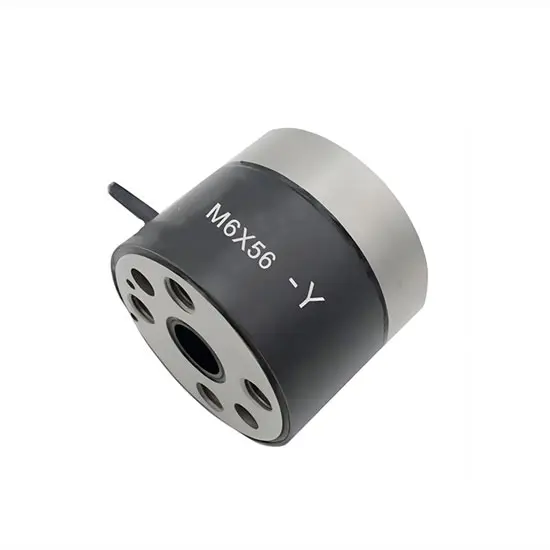
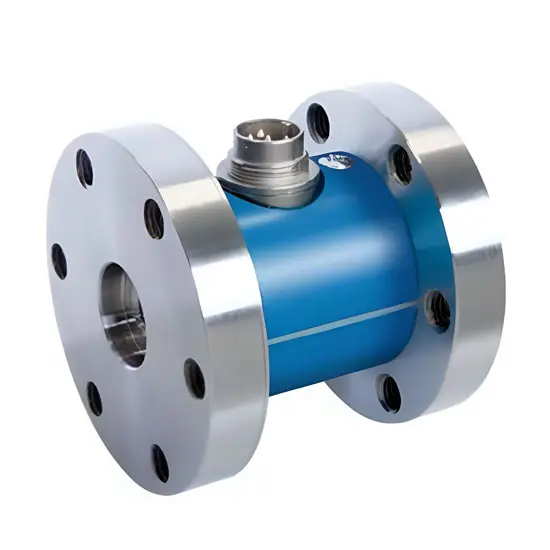
To ensure commensurate precision and safety within a tremendous variety of use cases, modern industries require high-performance sensors. Force and torque sensors are crucial components in robotics, automation, aerospace, automotive testing, and sophisticated manufacturing systems. For precision and reliable measurement applications, companies look for force and torque sensor providers, such as MareX, who have knowledge and experience of their specific applications.

What do Torque and Force Sensors Mean?

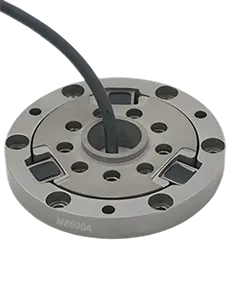
A force and torque sensor is a device that measures the degree of exerted force (push or pull) and torque (rotational force). When these sensors experience mechanical force, they transform the mechanical force into alterable electrical impulses that can be evaluated for the purposes of supervising, regulating, or empirically examining something.

Force magnitude is usually quantized in newtons (N) as torque is in newton meters (Nm). Such precision is always required in robotic arms, production lines, and testing environments.

Custom sensor manufacturing advancements have made it possible to build modern sensors for your specific use case requirements: size; load capacity; environmental sealing (IP66); and type of output signal.

How Does a Force and Torque Sensor Work?

The determining working element of a force and torque sensor is, in most cases, a strain gauge. Here’s a simplified breakdown:

  1. Mechanics of Force Application

When there is force or torque applied to the sensor there is a transient structure change of the sensor which is called slight deformation. However, this deformation is tiny yet it is measurable.

  1. Response of Strain Gauges

The sensor’s strain gauges respond to this deformation. When a structure experiences deformation, the strain gauges respond by altering their electrical resistance.

  1. Conversion of Signals

The change in resistance is converted to an electrical signal. The produced signal is directly proportional to the force/torque applied.

  1. Processing of Data

The signal is processed and calibrated to yield precise measurements, and this information can be used by real-time monitoring, feedback, and control systems.

The sensors offer high performance, and they offer the most information when it comes to accurate measurements, which makes them essential for accurate and reliable measurement in an industry.
What is a Multi Axis Force Torque Sensor?

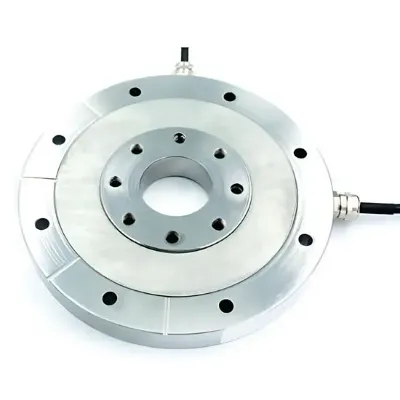
A Multi Axis Force Torque Sensor is one of the most advanced sensors in the world which measures force and torque in multiple dimensions simultaneously, as opposed to single-axis sensors which only capture measurement along one line and at one rotation point. These measures along the X, Y, and Z and also consider rotational torque about these axes.

These sensors are widely used in robotics, especially in robotic arms and end-effectors that require intricate movements and interactions. Today, multi-axis force sensors are commercially available and are equipped with sophisticated engineering solutions for end-users in these domains.

Primary Benefits

  • The ability to capture several different types of force simultaneously is a major benefit of this sensor.
  • Enhances accuracy on multilayered procedures.
  • Reduces the quantity of required sensors.

Applications of Force and Torque Sensors

Due to the versatility and accuracy, force and torque sensors have a broad range of uses in different industries.

  1. Robotics and Automation

Force feedback from sensors like yours allows robots to do delicate and precise work. Important for things like assembly, material handling and collaborative robotics.

  1. Automotive Industry

Databases used in engine testing, validate steering systems and components for safety and performance.

  1. Aerospace

Helps in the structural testing and simulation to see if the components can withstand excessive forces and extreme conditions.

  1. Manufacturing and Quality Control

During the production processes, sensors keep forces under control to ensure the quality of the final product.

  1. Medical and Biomechanics

Measuring human interaction forces accurately have applications in prosthetics, surgical instruments, and in research.

Importance of High Performance Sensors

With the pace of growing innovation in industries, the demand for high performance sensors is inevitable. Sensors have a direct impact in terms of:

  • High accuracy and repeatability
  • Durability in harsh environments
  • Real-time data monitoring
  • System efficiency
  • Decreased downtimes and reduced errors.

The torque sensors manufacturer you are dealing with should have quality assurance sensors, advanced calibration, and long-term reliability.

Importance of Custom Sensor Manufacturing

Not all applications can be satisfied with standard sensors. Custom sensor manufacturing comes into play in those scenarios. Custom sensors can be designed to meet demands such as:

  • Special shapes and sizes
  • Certain ranges of loads
  • Resistance to specific environmental elements (temperature, moisture, vibration)
  • Specific output signals and integration

At MareX, we engineer bespoke solutions that cater to your operational requirements and deliver in the most difficult conditions.

Choosing the Right Force and Torque Sensor Provider

Selecting a force and torque sensor manufacturer demands certain considerations to facilitate selection of a manufacturer that guarantees reliability and accuracy. Here are a few factors that will influence the choice of a manufacturer:

  • Possibility of Customization: for manufacture of application specific sensors
  • Precision & Calibration: manufacturer offers high accuracy and adequate calibration support
  • Relevant Experience: Practical exposure across several industries
  • Integration: the process to be integrated with existing systems
  • Durability & Quality: The sensors are meant to withstand challenging situations

MareX stands out as a trusted partner, offering innovative solutions backed by engineering expertise and a commitment to quality.

The Multi Axis Sensors: The Future of Sensors

Automation has a growing demand for precise and dynamic measurements. The multi-axis torque and force sensors are critical for the next in demand systems.

These sensors enable machines to possess the ability to “feel” and respond to the environment around them. This ability is particularly important for the following:

  • Collaborative robots (cobots)
  • AI-driven automation
  • Advanced testing systems
  • Smart manufacturing

The widespread availability of Multi axis force sensors for online purchase has made it easier for businesses to incorporate these sensors into their operations.

Conclusion

In today’s engineering world, the force and torque sensors are the backbone of industrial processes. They measure physical forces and convert them into actionable data, which can improve control, increase efficiency, and enhance safety of processes and applications.

Sensors are key parts of almost any system, and their choice can significantly change the system quality and efficiency. You can opt for standard or custom-designed sensors. As a leading manufacturer of torque sensors and multi-axis force torque sensors, MareX provides high-end, efficient solutions to meet your needs.

With rapid changes across various sectors, investing in sensor technologies will be a key enabler of competitiveness and preparedness for the future.
Custom Sensor Manufacturing Expert

The rapid pace of change makes accurate data essential for modern business. And central to the collection of that data are sensors. They measure temperature, pressure, motion and flow among other critical values. These measurements allow machines to run without a hitch and safely. Standard sensors could be purchased for any general scenario, however are not always suitable for each situation. That is where Custom Sensor Manufacturing comes into play.

We believe that no business should have convoluted their systems to conform to dumb sensors; at MareX, we design with adaptability in mind. The sensor is better off designed according to the system’s specific requirements. By partnering with an expert in custom sensor manufacturing, these companies have the opportunity to improve performance, mitigate risk, and create better products.

Understanding the Real Need

Every industry has different challenges. A marine business is handling saltwater and humidity. An industrial plant is exposed to heat, pressure and vibration. Medical equipment as a whole needs exceptional precision and very stringent safety standards. Standardized sensors have more general purpose designs and therefore do not necessarily operate optimally in all environments.

Custom Sensor Manufacturing addresses this issue by designing sensors to meet the specific needs of the job. All of these factors are selected for the sensor based on where it is going to be used and how. Trade-offs are thus rendered moot. A better fit between sensor and application leads to more effective, longer-lasting systems.

Improved Accuracy and Performance

One key reason that companies adopt Custom Sensor Manufacturing is accuracy. Measurement errors amounting to even a few millimeters can lead to system failures, or reduced efficiencies over time. Each sensor is bespoke calibrated for its use. This enhances measurement precision and consistency.

Machines run better when sensors tell the truth. Maintenance can be planned properly. Unexpected breakdowns become less common. In the long run accurate sensing increases overall productivity.

Custom Sensor Manufacturing enables your businesses to have controllable operations. MareX in particular delivers sensors that are stable and maintain reliable readings on their real working conditions.

Stronger Durability

As with most industries, many are working under harsh environments. Poorly designed sensors can take damage from heat, dust, moisture, chemicals and heavy movement. Standard products might not last as long under these conditions.

When working with engineers of custom sensors, they choose sturdy materials and protective designs appropriate to the environment in which the sensor will function. The sensor lifespan is extended and downtime reduced. Keeping a sensor for long will simply save on replacements and maintenance costs.

Durability is a focus at MareX. We build sensors to deal with real-world stress. We strive to develop solutions that are effective under tough circumstances.

Easier Integration

The second major benefit of Custom Sensor Manufacturing is seamless integration. Standard sensors may need additional connectors, adapters or modifications. It also increases installation time and adds cost.

A custom solution has been crafted so that elements were designed from the ground up. All these features are tailored to the customer’s specifications including output types, mounting styles, dimensions and cable lengths. This speeds up and simplifies the installation.

Integration should never be complex with MareX. When properly designed, a custom sensor integrates seamlessly into the system and cuts down on errors and time during manufacturing.

Supporting Innovation

When companies are not constrained by off-the-shelf components then being able to innovate becomes simpler. Custom Sensor Manufacturing Provides Engineers with Greater Freedom to Develop New Products These sensors can then be further miniaturised, reduced in weight or upgraded to meet the needs of contemporary technologies.

Business partnerships with MareX become a significant part of the business development process. We enable design discussions, experimentation, and iteration. This collaboration often reduces development cycles and assists in bringing products to market sooner.

Custom Sensor Manufacturing is more than just creating a product. It means not just supporting creative ideas, but making them a working solution.

Long-Term Cost Benefits

Some companies fear the price tag of custom solutions. It may require a slightly higher initial investment, but Custom Sensor Manufacturing tends to save money in the long run. A well-designed sensor minimizes system alterations, mitigates failures, and reduces maintenance demands.

Reliably functional sensors are minimizing downtime and, in turn, safeguarding productivity. They also decrease warranty claims and service costs. The savings can be substantial over a product’s full life.

Scalability for Growing Businesses

As companies expand, their production demands grow as well. Custom Sensor Manufacturing can support this growth by providing flexible solutions that adapt to changing needs. A professional manufacturing partner plans for both small production runs and large-scale manufacturing. They understand how to maintain consistent quality while increasing output. With the right partner, businesses can scale smoothly without compromising performance, accuracy, or reliability.

At MareX we create processes that scale nicely. So whether a client requires prototypes or thousands of units, we apply the same level of quality and consistency. With changing markets it is important to be flexible, and we ensure our clients are prepared for future growth.

Building a Strong Partnership

Partnering with a Custom Sensor Manufacturing specialist provides technical expertise and assistance. Instead of just selling a product, an effective partner provides value by helping resolve problems and enhance performance.

At MareX, we believe in long-term relationships. We communicate clearly, listen critically, and remain engaged even beyond delivery. When changes are required, we’re quick to respond. A partnership with this approach creates trust and confidence.

Having a trusted manufacturing partner allows businesses to devote more time, energy, and resources on growth and innovation.

Conclusion 

At MareX, Custom Sensor Manufacturing is not a service; it is our way of life. It is a promise to excellence, accuracy, and collaboration.” No two applications are alike, and no client should have anything short of a tailored solution.

Opting for Custom Sensor Manufacturing gives businesses improved accuracy, enhanced durability, seamless integration, and cost-effectiveness in the long run. Even more importantly, they gain a partner who has been through their struggles and partners with them to build trusted solutions.

We proudly serve companies that require high performance and reliable results. From design through production, MareX stands ready to deliver custom sensor solutions that enable your systems to look and perform their best—now and into the future.

How Multi-Axis Sensors Enable Precision in Industrial Automation

In the currently advanced and busy industrial lifestyles, machines have to be more efficient, quicker and accurate. The multi-axis sensor is one technology that is making this possible. These strong sensors can monitor forces or movements in more than one direction, which gives machines the information they need to work accurately. The multi-axis sensors assist factories to run more normally and at least safer because they have improved control and response. They may be applied to robotics, assembly lines, and packaging systems.

Understanding Multi-Axis Sensors in Simple Terms

A multi-axis sensor may measure force, pressure, or movement along two or more axes simultaneously as though your hand is being shoved forward and pulled at the same time. Similar to human beings, machines also use multi-axis sensors to detect their environment and make quick transitions. These are great for industrial jobs that need precise placement, including putting things in the appropriate place or tightening screws with the right amount of pressure.

Why Industrial Automation Depends on Precision

Consistency is important for automation. Even a small mistake might cause significant issues when a robot does the same thing a thousand times. A multi-axis force sensor helps cut down on these mistakes by giving the system real-time feedback. As machines change based on sensor data, they become more accurate and less likely to make mistakes. This cuts down on waste, saves time, and makes the product better. Things are not just about how fast you do things; it’s about doing it perfectly every time.

6 Axis Force Torque Sensor

Sensor Customisation Improves Task Performance

There are different kinds of occupations in a factory. Some machines need to be able to feel light pressure, while others need to be able to lift huge things. This is where customising sensors for torque and force comes in. Engineers may now make sensors that are just right for each use. A robot that puts together cellphones might utilise light-touch sensors, while one that moves automotive parts might need a heavy-duty version. Custom sensors make sure that each job is done with the proper amount of attention and strength.

Benefits of Multi-Axis Sensors at a Glance

• Send accurate real-time data in many directions.
• Make it easier to operate machines and repeat tasks.
• Keep an eye on load conditions to help cut down on wear and tear.
• Allow for specific settings for torque, pressure, and positioning. They play a very significant role in robotics, packaging, testing and automation systems.
• Enhance quality control in order to reduce errors and idle time.
• Quickly finding overload or imbalance makes operations safer.

The Role of Force Sensors in Smart Manufacturing

Smart factories of today use data to make better choices. A force sensor helps collect that information by monitoring how much pressure is being put on it at any given time. These sensors inform robotic arms how hard to hold on or how gently to touch. They let machines handle both heavy and fragile things with the same level of care. This combination of strength and sensitivity makes it easier to handle products and keeps everyone on the floor safer.

Looking Ahead to the Future of Automation

The requirement for specialised sensor manufacture will only grow as companies grow and need more accuracy. Companies are already using multi-axis force sensors to make automation smarter. The capacity to fine-tune machines with accurate input is changing the way products are made, tested, and shipped. These sensors are making factories more efficient and less wasteful with every upgrade, from small electronics to big construction.

Conclusion

Multi-axis sensors are transforming how machines work in factories. By providing them with stronger control, real-time feedback, and the possibility of quantifying force in a manner they find useful, they make it possible to make systems work more accurately and with fewer errors. These sensors enhance the automation to become smarter and safer since robots are capable of doing simple jobs as well as complex ones. Because of the continuous improvement of technology, there will always be an increasing demand for an accurate and flexible sensor solution. For the latest multi-axis sensor technology that is made to last, trust the professionals at MareX.