
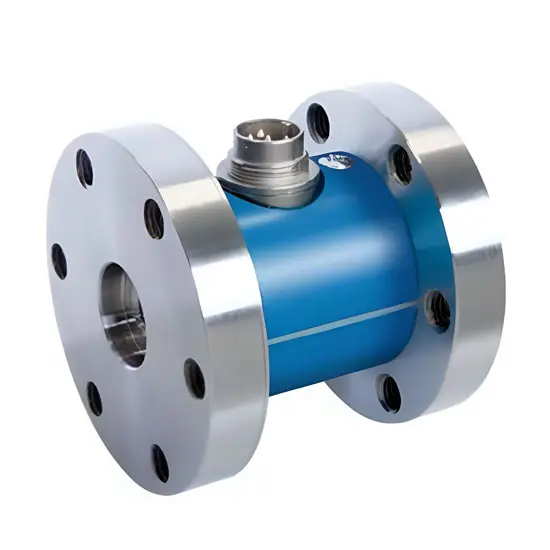
To ensure commensurate precision and safety within a tremendous variety of use cases, modern industries require high-performance sensors. Force and torque sensors are crucial components in robotics, automation, aerospace, automotive testing, and sophisticated manufacturing systems. For precision and reliable measurement applications, companies look for force and torque sensor providers, such as MareX, who have knowledge and experience of their specific applications.
What do Torque and Force Sensors Mean?
A force and torque sensor is a device that measures the degree of exerted force (push or pull) and torque (rotational force). When these sensors experience mechanical force, they transform the mechanical force into alterable electrical impulses that can be evaluated for the purposes of supervising, regulating, or empirically examining something.
Force magnitude is usually quantized in newtons (N) as torque is in newton meters (Nm). Such precision is always required in robotic arms, production lines, and testing environments.
Custom sensor manufacturing advancements have made it possible to build modern sensors for your specific use case requirements: size; load capacity; environmental sealing (IP66); and type of output signal.
How Does a Force and Torque Sensor Work?
The determining working element of a force and torque sensor is, in most cases, a strain gauge. Here’s a simplified breakdown:
- Mechanics of Force Application
When there is force or torque applied to the sensor there is a transient structure change of the sensor which is called slight deformation. However, this deformation is tiny yet it is measurable.
- Response of Strain Gauges
The sensor’s strain gauges respond to this deformation. When a structure experiences deformation, the strain gauges respond by altering their electrical resistance.
- Conversion of Signals
The change in resistance is converted to an electrical signal. The produced signal is directly proportional to the force/torque applied.
- Processing of Data
The signal is processed and calibrated to yield precise measurements, and this information can be used by real-time monitoring, feedback, and control systems.
The sensors offer high performance, and they offer the most information when it comes to accurate measurements, which makes them essential for accurate and reliable measurement in an industry.
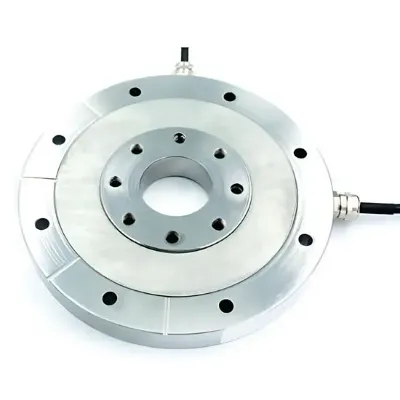
What is a Multi Axis Force Torque Sensor?
A Multi Axis Force Torque Sensor is one of the most advanced sensors in the world which measures force and torque in multiple dimensions simultaneously, as opposed to single-axis sensors which only capture measurement along one line and at one rotation point. These measures along the X, Y, and Z and also consider rotational torque about these axes.
These sensors are widely used in robotics, especially in robotic arms and end-effectors that require intricate movements and interactions. Today, multi-axis force sensors are commercially available and are equipped with sophisticated engineering solutions for end-users in these domains.
Primary Benefits
- The ability to capture several different types of force simultaneously is a major benefit of this sensor.
- Enhances accuracy on multilayered procedures.
- Reduces the quantity of required sensors.
Applications of Force and Torque Sensors
Due to the versatility and accuracy, force and torque sensors have a broad range of uses in different industries.
- Robotics and Automation
Force feedback from sensors like yours allows robots to do delicate and precise work. Important for things like assembly, material handling and collaborative robotics.
- Automotive Industry
Databases used in engine testing, validate steering systems and components for safety and performance.
- Aerospace
Helps in the structural testing and simulation to see if the components can withstand excessive forces and extreme conditions.
- Manufacturing and Quality Control
During the production processes, sensors keep forces under control to ensure the quality of the final product.
- Medical and Biomechanics
Measuring human interaction forces accurately have applications in prosthetics, surgical instruments, and in research.
Importance of High Performance Sensors
With the pace of growing innovation in industries, the demand for high performance sensors is inevitable. Sensors have a direct impact in terms of:
- High accuracy and repeatability
- Durability in harsh environments
- Real-time data monitoring
- System efficiency
- Decreased downtimes and reduced errors.
The torque sensors manufacturer you are dealing with should have quality assurance sensors, advanced calibration, and long-term reliability.
Importance of Custom Sensor Manufacturing
Not all applications can be satisfied with standard sensors. Custom sensor manufacturing comes into play in those scenarios. Custom sensors can be designed to meet demands such as:
- Special shapes and sizes
- Certain ranges of loads
- Resistance to specific environmental elements (temperature, moisture, vibration)
- Specific output signals and integration
At MareX, we engineer bespoke solutions that cater to your operational requirements and deliver in the most difficult conditions.
Choosing the Right Force and Torque Sensor Provider
Selecting a force and torque sensor manufacturer demands certain considerations to facilitate selection of a manufacturer that guarantees reliability and accuracy. Here are a few factors that will influence the choice of a manufacturer:
- Possibility of Customization: for manufacture of application specific sensors
- Precision & Calibration: manufacturer offers high accuracy and adequate calibration support
- Relevant Experience: Practical exposure across several industries
- Integration: the process to be integrated with existing systems
- Durability & Quality: The sensors are meant to withstand challenging situations
MareX stands out as a trusted partner, offering innovative solutions backed by engineering expertise and a commitment to quality.
The Multi Axis Sensors: The Future of Sensors
Automation has a growing demand for precise and dynamic measurements. The multi-axis torque and force sensors are critical for the next in demand systems.
These sensors enable machines to possess the ability to “feel” and respond to the environment around them. This ability is particularly important for the following:
- Collaborative robots (cobots)
- AI-driven automation
- Advanced testing systems
- Smart manufacturing
The widespread availability of Multi axis force sensors for online purchase has made it easier for businesses to incorporate these sensors into their operations.
Conclusion
In today’s engineering world, the force and torque sensors are the backbone of industrial processes. They measure physical forces and convert them into actionable data, which can improve control, increase efficiency, and enhance safety of processes and applications.
Sensors are key parts of almost any system, and their choice can significantly change the system quality and efficiency. You can opt for standard or custom-designed sensors. As a leading manufacturer of torque sensors and multi-axis force torque sensors, MareX provides high-end, efficient solutions to meet your needs.
With rapid changes across various sectors, investing in sensor technologies will be a key enabler of competitiveness and preparedness for the future.