
What Is Force Control Technology? How Multi-Axis Sensors Enable Smarter Robotics
The real breakthrough in robotics today isn’t about stronger arms. It’s about smarter fingertips. The quiet shift from robots that just move to robots that can genuinely feel and interact is reshaping automation. This change is driven by force control technology, with multi-axis force sensors as its essential core. Let’s look at how this works and why it matters now.
Understanding Force Control Clearly
Force control technology gives a machine a sense of touch and the ability to respond. Imagine wiping a table. Hand, thou dost feel the pressure, and it keeps adjusting. Your brain processes feedback from your nerves in a continuous loop.
That’s force control for a robot. It’s a real-time cycle:
- A sensor measures the force of interaction.
- A controller compares this to a target force.
- The robot’s motors instantly adjust.
This creates adaptability. A robot without it is blind to contact. It rigidly follows its path. If something is misaligned, it jams or pushes harder, causing damage. Force control allows the robot to yield and handle real-world variability.
Why One-Dimensional Sensing Falls Short
To see the value of multi-axis sensors, consider their simpler predecessor. A single-axis load cell measures force along one straight line. It can tell you a robot is pushing down with 10 newtons. But what if it’s also pushing sideways? That sensor is blind to the lateral force.
Real-world tasks are messy and three-dimensional. They involve combined motions. Think about screwing in a lightbulb. You apply both downward force and rotational twist. A single-axis sensor gives an incomplete picture. This limitation forces engineers to design overly precise, expensive fixtures to eliminate all variability. It’s a rigid and fragile way to build automation.
The Multi-Axis Sensor: A Complete Tactile Picture
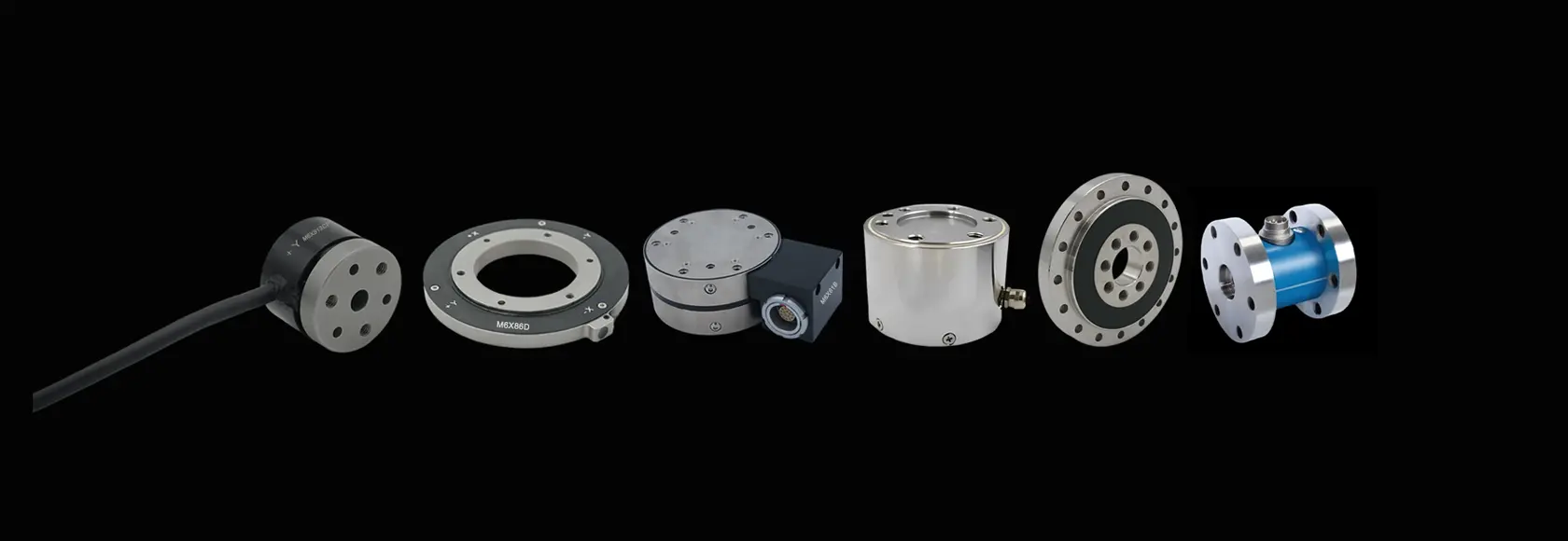
This is where multi-axis force/torque sensors change the game. A typical 6-axis sensor is the foundation for true force control. It does not quantify only one thing. It dissects the whole physical interaction by making simultaneous measurements:
- Forces (Fx, Fy, Fz): Push and pull along the X, Y, and Z axes.
- Torques (Tx, Ty, Tz): Twist, turn, and tilt around those axes.
This small sensor should be mounted on the wrist between the end-effector and the gripper or tool of the robot. You have just given the machine the feel of a fine touch on the very end of the fingertips. Now it knows not only how difficult it is pressing, but also the direction and the kind of twist. This entire stream of data opens up new possibilities.
Real Applications This Technology Enables
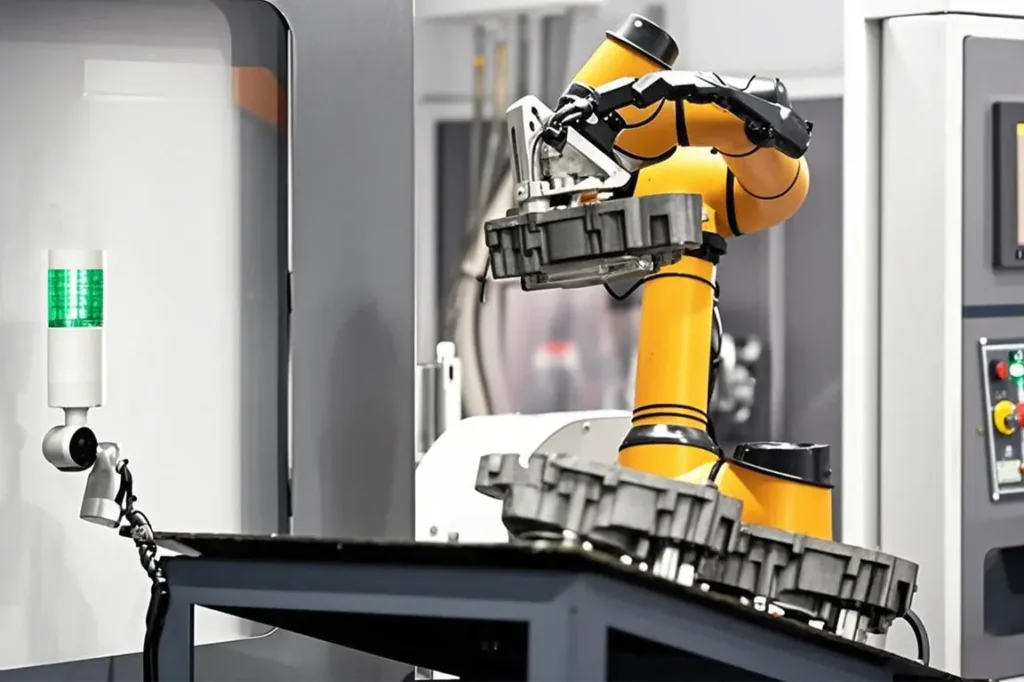
This full-spectrum force data makes specific, valuable tasks possible and reliable.
Precision Assembly and Insertion. This is the famous “peg-in-a-hole” challenge. It applies to inserting connectors, placing circuit boards, or assembling gears. With multi-axis feedback, the robot feels the initial contact and the subtle guiding forces as parts align. It can execute a gentle spiral search to seat a component perfectly, preventing jams and damage.
Adaptive Surface Finishing. Tasks like polishing, grinding, or deburring is terrible for traditional robots. Any variation in the part ruins the finish. With a multi-axis sensor maintaining a set contact force, the robot automatically adjusts its path to follow the object’s contour. This delivers consistent quality and reduces tool wear without needing perfect part positioning.
True Human-Robot Collaboration. Safety lasers can stop a robot when a human is nearby. Force control allows for fluid interaction. With multi-axis sensing, a collaborative robot can feel a human physically guiding its arm for easy programming. It can also detect unexpected contact from any angle and stop immediately, enabling safer shared workspaces.
Objective Quality Testing. What is the method of determining the snap-fit of a plastic lid or the screw torque? A multi-axis sensor on a robot is capable of repeating the action of a human tester and recording the precise force profile. Any discrepancy between the right profile raises an alert of a possible flaw, which gives stability in quality control based on data.
Implementation: It’s a System, Not Just a Part
A key lesson is that a multi-axis sensor is not a simple plug-and-play component. Success requires treating it as part of an integrated force control system.
Sensor placement is critical. Mounting it closer to the tool improves accuracy. The data stream is set to be high speed; therefore, it requires filtering in order to eliminate electrical noise. Control software parameters should be well-adjusted to a certain task. How fast and violent is the correction of the robot? It is also important to collaborate with a provider who knows the full integration process to avoid having unstable systems and deliver the promised results.
Evolving From Reaction to Prediction
The path forward is clear. As robots operate in less structured environments, force control transitions from a specialty to a necessity. The next evolution will merge this rich force data with machine learning. Robots will begin to learn from tactile experience, predicting the best way to handle new objects and recognizing the force signature of a successful operation.
This future of responsive, intelligent automation is built on precise, multi-dimensional sensing. The machines are gaining a sense of touch. That simple change is making them capable of far more complex and valuable work.
To see how tailored force sensing can solve specific automation challenges, the engineering team at MareX can provide insights. Their work focuses on the precise sensor technology that enables this intelligent interaction.