
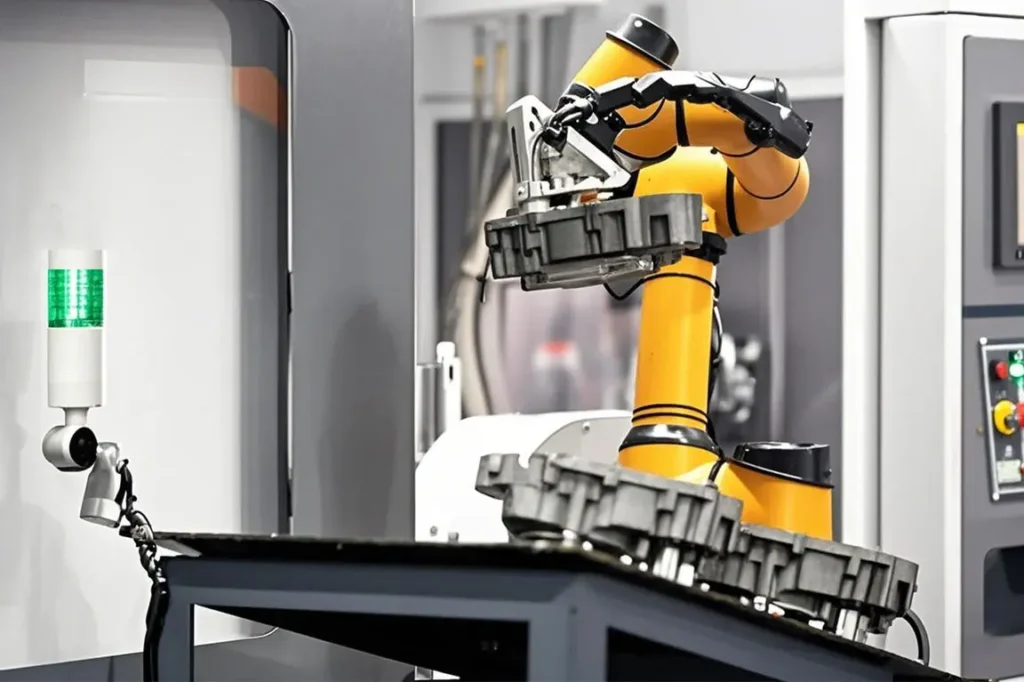
Designing a Custom Sensor Manufacturing Workflow: From Concept to Calibration
It often starts with a problem. A machine that keeps failing on the production line. A surgery robot that requires a finer hand. A study project that requires a high degree of accuracy, which is not provided by off-the-shelf parts.
But between that initial challenge and a finished product lies a critical, often messy, journey. How do you transform a concept into a precision sensor that works flawlessly in the real world? The secret isn’t just a great design. It’s a rock-solid manufacturing workflow.
This post will walk you through the five essential stages of creating a custom sensor. We will plot the route between your original notion to ultimate calibration. You will know how not to fall into typical traps. And you can watch how a clear process will transform a complex element into a consistent high-performance element.
The Five Non-Negotiable Stages of Sensor Creation
Building a sensor is like conducting a symphony. Every section must come in at the right time. Miss a step, and the entire performance suffers. Here is the framework we use to ensure harmony from start to finish.
Stage 1: The Deep Dive – Uncovering the Real Need
This is the most important phase. It’s where we move from “what you want” to “why you need it.” We don’t just take a spec sheet. We have a conversation.
We ask questions like:
• What is the physical environment? Extreme heat, vibration, and moisture?
• What forces will it actually see? Short bursts? Constant pressure?
• How will it connect to your system? What data output do you expect?
A client once came to us for a “standard torque sensor.” After asking these questions, we discovered their device would experience massive shock loads. A standard sensor would have failed within weeks. We designed a ruggedized version from the ground up. That’s the power of a deep dive. It is time, money, and future-saving.
Stage 2: The Blueprint – Where Ideas Take Shape
Now, we translate those needs into a tangible design. This is an engineering playground. We select the right materials. We model the internal strain gauges. We run simulations on the housing.
We focus on three core pillars:
1. Performance
Will it meet the accuracy and range requirements?
2. Durability
Can it survive its operating life?
3. Integrability
Will it fit and connect without forcing you to redesign your entire assembly?
This stage produces a virtual prototype. It’s a complete digital twin. We can spot potential issues before we ever cut metal.
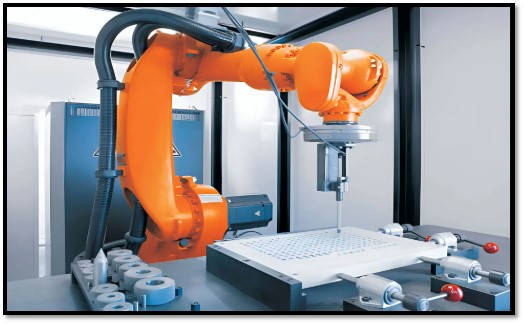
Stage 3: The Hands-On Build – Prototyping and Proof
A design on a screen is just a theory. We need proof. This is where we build a working prototype. It’s a hands-on, iterative process.
We do not simply construct one and that is all. We build, we test, and we refine. This is due to the fact that a material may not behave as anticipated. In other cases, a real-world experiment indicates a minute resonance that the simulation overlooked. This phase is entirely validative in nature. It is that dirty, mundane business that makes the difference between a good and a great sensor. It is aimed at a prototype that works. It excels.
Stage 4: The Final Check – Rigorous Validation Testing
The prototype works. Great! Now we have to make sure it always works. This stage is about brutal honesty. We put the sensor through its paces in conditions that mimic years of use.
Our tests often include:
1. Cycle Testing
Applying the force a thousand, millions of times.
2. Environmental Testing
Subjecting it to changes in temperatures and moisture.
3. Cross-Talk Validation
Assuring a push does not produce an artificial signal.
This data is gold. It proves the sensor’s reliability. It gives you the confidence to move forward.
Stage 5: The Master Touch – Precision Calibration
This is the last and most important step. A sensor that is not calibrated may be compared with a ruler that has no marks. It may be straight, but it has no use in measurement.
We don’t just check one point. We map the sensor’s performance across its entire range. We apply known, traceable forces and record the output. This creates a unique calibration certificate for each sensor. This certificate is its passport to accuracy. It links its performance back to international standards. This is what makes your data trustworthy.
Your Next Step Towards Flawless Sensing
A custom sensor is a significant investment. But a disciplined, transparent workflow de-risks the entire process. It turns a complex challenge into a predictable, successful partnership. From the initial deep dive to the final calibration certificate, every stage is built on clear communication and proven engineering principles.
At MareX, this isn’t just our process; it’s our promise. As we are nearing decades of experience, your custom sensor will be made right, and made right, built, calibrated and completed.
Ready to translate your concept into a precision reality? Call our engineering team and get a free, no-obligation workflow consultation today. What is the most significant sensing problem you are confronting?