

Common Challenges in Multi-Axis Force Measurement – And How to Solve Them
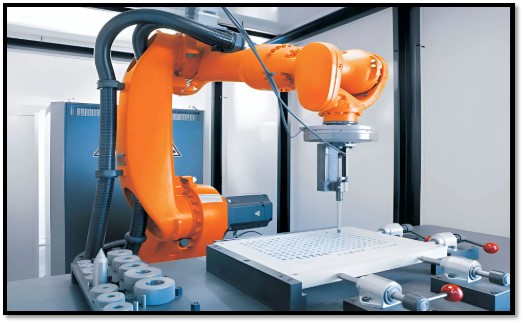
A robotic arm in a clean room applies too much force, cracking a solar wafer. A collaborative robot in assembly feels sluggish, its reactions just slightly off. The source isn’t the code. It’s the force sensor. The system’s sense of touch is flawed. These aren’t malfunctions. They are mismatches. The silent language of force feedback is speaking gibberish, and the machine obeys.
The Core Challenge: It’s Not a Sensor, It’s a Compromise
You buy a multi-axis force sensor for a reason: precision. Yet, you face a trio of relentless problems that undermine that goal. They are technical, yes, but their impact is purely practical: wasted time, scrap, and underperformance.
Crosstalk: The Data You Didn’t Ask For
Apply pure downward force. The Z-axis reads correctly. But the Y-axis also shows a slight signal. That’s crosstalk. Force from one direction leaks into another. Your controller receives a lie. It tries to compensate, introducing new errors. The result? A machine that fumbles its task. A grinding tool that wobbles. A prosthetic grip that feels unnatural. Standard sensors tolerate a crosstalk spec of 2-5%. In micron-level work, that’s a canyon of error.
Environmental Sabotage
Your factory floor is the enemy. Vibration from conveyors. Temperature swings from welding. Electromagnetic noise from drives. These aren’t nuisances. They are signal assassins. A sensor calibrated in a lab can drift wildly when bolted next to a stamping press. The data becomes noisy, unstable, and useless. You don’t need a sensor. You need a sensor built for your specific warzone.
The Physical Integration Headache
Found the perfect sensor. Right capacity. Perfect accuracy. Now install it. The bolt pattern doesn’t match. The connector faces the wrong way. The output is an analog voltage, but your system only reads digital EtherCAT. The project halts. You’re now redesigning mounting brackets, adding signal converters, and creating new failure points. The “solution” creates three new problems.
Solving It: The Custom-Fit Philosophy
Fixing this requires a different mindset. Stop shopping for a component. Start engineering a measurement node. The solution is specificity.
Designing Out Crosstalk at the Source
Fighting crosstalk with software filters is a band-aid. The fix is physical and fundamental. It requires a sensing element designed with decoupling as the first principle. Think of it as architectural isolation for strain gauges. Advanced designs use unique grid patterns and monolithic structures to ensure force directed on the X-axis stays reported on the X-axis. The goal is a crosstalk specification under 1%. Clarity by design, not correction.
Engineering for the Environment, Not Against It
You combat environmental noise by building a fortress, not a fence. This means:
- Material Science: Selecting alloy cores with near-zero thermal expansion for the sensing element itself.
- Absolute Sealing: Hermetic welds that protect the internal electronics from humidity, coolant, and dust permanently.
- Active Shielding: Built-in filtering that targets the specific EMI frequencies of industrial motors.
The sensor must be born from your environment’s harsh reality.
Integration as the Starting Point
This is where true customization changes everything. The mechanical and electrical interface should not be an afterthought. It is the primary design constraint. A partner who gets this will offer what catalog suppliers cannot:
- A custom flange that bolts directly to your robot’s wrist interface.
- A low-profile housing machined to fit inside a surgical tool’s existing cavity.
- A native Ethernet/IP or PROFINET output from the sensor’s own processor.
- The machine’s design dictates the sensor’s form. Not the other way around.
From Problem to Precision: Making the Shift
The outcome of this approach is transformative. It moves force measurement from being a variable to being a constant. A foundation. When the data is inherently clean and the fit is physically seamless, the machine’s intelligence can finally act with confidence. That robotic arm doesn’t just avoid breaking the wafer. It can feel the wafer’s presence, its alignment, and handle it with nuanced, adaptive pressure.
This shift starts with a different kind of specification document. Don’t just list the sensor specs you think you need. Document the real-world problem.
- Describe the exact forces, both expected and potential overload.
- Map the environmental attackers: temperature range, vibration sources, and wash-down procedures.
- Define the mechanical and electrical space: share the 3D model of the assembly, and list the communication protocols your controller understands.
That document isn’t a purchase order. It’s an invitation to solve the problem correctly.
Where does your current system’s “sense of touch” fall short? Identifying that precise gap is the first step toward building a solution that doesn’t just measure, but truly understands.
MareX engineers begin with that question. The blueprint follows.