The post Multi-Axis Force Sensor vs Single-Axis Force Sensor: Choosing the Right Solution appeared first on MareX.
]]>Multi-Axis Force Sensor vs Single-Axis Force Sensor: Choosing the Right Solution
The robotic arm on your factory floor? It looks smart. But it can be pretty clumsy without the right feedback. Think about it, trying to plug in a USB cable. A simple push might work. But if the port is a bit off? The arm starts to twist and jam. It is fighting by itself; it has little to feel. This is the core of the issue.
Choosing the wrong force sensor is like giving that robot poor eyesight. Everything gets slow, clumsy, and expensive. So how do you pick? The simple single-axis sensor? Or the more complex multi-axis type? This isn’t just a technical choice. It’s a business one. Get it right, and your project runs smoothly. Get it wrong, and you face delays and wasted money.
We are going to pass through the actual distinction of these sensors. You’ll see clear examples. And you’ll get a straightforward checklist to make the perfect choice for your needs.
The Big Idea: One Direction vs. Every Direction
We shall leave this out of the book. Visualize forces in some sensible manner.
A single-axis force sensor is a one-trick pony. And that’s its greatest strength! It measures force in one single direction. That’s all it does. It answers a simple question perfectly: “How hard is something pushing or pulling in this straight line?” A great example is the scale in your bathroom. It only measures how much you’re pushing down on it. Nothing else.
Now, a multi-axis force sensor is a whole team in one device. It feels like pushes and pulls from all sides. The popular 6-axis sensor is a real overachiever. It doesn’t just feel like a shove. It feels like a twist, too.
• It feels stretching and pulling in three directions straight: up/down, left/right and forward/backward.
• Plus, it senses the twists and turns around each of those lines.
It is almost an X-ray insight into the physical forces in action. You read the entire story, not only one chapter.
Go Single-Axis When Your Task is Simple and Straight
Never underestimate a simple tool. For straightforward jobs, a single-axis sensor is often the best pick. It’s tougher, cheaper, and easier to set up.
Choose a single-axis sensor when the force is predictable and moves in one clean line.
You see this in everyday situations:
Basic Push/Pull Tests
Similar to putting a rope to the test and checking its capacity to hold a certain weight.
Weighing Stuff
Monitoring how much material is in a storage bin.
Quality Checks
Making sure a machine part is always pressed together with the same force.
Here’s the takeaway: If your problem is as simple as “Is this force strong enough?” or “How much weight is here?”, then a single-axis sensor is your best friend. It’s the reliable specialist.

Time for Multi-Axis When Things Get Complicated
Forces in the real world are messy. They rarely come from just one direction. That’s when you need the bigger picture.
You need a multi-axis sensor when forces get tangled up or when you need to understand a complex motion.
This is where the magic happens:
Advanced Robotics
The robot sanding a curved concept of a piece of wood should have the ability to control the push and the slide in the lateral direction in order to acquire a smooth finish.
Sports Science
In order to study a golf swing, you must record the downward force, the rotational twist, and the side-to-side shear at the same instant.
Tough Product Testing
When you push a new game controller button, you need to know if an awkward push is bending the plastic inside. A single-axis sensor would miss that.
A multi-axis sensor is not an extravagance in such instances. There is no other solution than doing the job right.
Let’s Bring It Home
It is all relative to the problem you are solving.
• Single-Axis is your hero for simple, one-directional tasks. It’s the reliable specialist.
• Multi-Axis is your champion for complex, interactive applications. It’s the master of context.
Remember, the goal isn’t to buy the most advanced sensor. The goal is to buy the sensor that fixes your problem.
Still undecided, just make a call to us. The team at MareX eats, sleeps, and breathes force measurement. We assist your type of people on a daily basis. We can make the noise disappear and get the just-right solution to your project. Don’t waste time guessing.
The post Multi-Axis Force Sensor vs Single-Axis Force Sensor: Choosing the Right Solution appeared first on MareX.
]]>The post Expert Spotlight: The Benefits of Partnering with a Custom Sensor Manufacturing Specialist appeared first on MareX.
]]>Expert Spotlight: The Benefits of Partnering with a Custom Sensor Manufacturing Specialist
Ever watched a robot pick up a glass of water? At first glance, it looks easy. But here’s the thing: if the grip is even slightly off, the glass either slips or shatters. Not exactly what you want in a high-stakes project. And that’s the problem with off-the-shelf sensors: close enough isn’t always good enough.
This is where a custom sensor comes in. It’s not just hardware; it’s peace of mind. In this post, we’ll dive into why teaming up with a manufacturer of custom advanced sensor solutions feels more like building a partnership than making a purchase. Along the way, you’ll see how a customization specialist for a 6-axis force sensor or torque-based design can push industries like robotics, aerospace, and automation toward better results.
Why Partner with a Custom Sensor Manufacturer?
Think about it. You would not put on another person’s prescription glasses, would you? The same goes for sensors. General-purpose tools can work “okay,” but projects demanding real precision need something more.
Tailored Design for Complex Needs
Every application tells its own story. In robotics, even a 1% error in force detection might trigger downtime or worse, a safety issue. That’s where a customization specialist for a 6-axis force sensor makes a difference. They don’t just hand you a box; they design a solution that matches your exact load, range, and accuracy.
Take one aerospace testing facility. Their challenge? Measuring extreme torque while keeping sensors lightweight. Standard models failed. But with a custom design, they achieved repeatable accuracy without slowing operations. That level of precision? Only possible with sensor customization.
The Competitive Edge of Sensor Customization for Torque
Torque is pronounced as a mere number on a piece of paper, yet in reality, it is all about balance, safety and performance.
- Higher Efficiency: Sensors tuned to your setup cut down friction losses.
- Better Accuracy: Custom builds filter out false readings, which makes your AI and machine learning data way more reliable.
- Longer Lifespan: Components are durable when they are designed for your application rather than by coercing a one-size-fits-all design.
Bottom line: sensor customization for torque doesn’t just improve performance, it reduces costs and headaches over time.
Advanced Industries Demand Advanced Solutions
Here’s what you might notice. The more advanced the industry, the less room there is for “almost good enough.” That’s why a manufacturer of custom advanced sensor solutions is key.
- Robotics & Automation: For tasks where a robotic arm has to thread a needle or handle delicate surgical tools.
- Aerospace & Defense: In places where vibration, heat, and pressure render the conventional sensors useless.
- Medical Devices: Think prosthetics or rehab tech that need sensitive feedback to stay safe.
Custom solutions aren’t just problem-solvers. They’re innovation-starters.
The Benefits Go Beyond Hardware
Partnering with a custom sensor expert is bigger than buying components. It’s building a relationship with people who’ve walked the path before.
Here’s what you actually gain:
- Collaborative Engineering – You are not guessing yourself alone; you are brainstorming with experts.
- Faster Prototyping – Faster cycles imply that your ideas are commercialized sooner.
- Scalability – Production bends with you, whether you require 10 units or 10000 units.
- Trusted Support – Calibration, repairs, fine-tuning, they’ve got your back.
This type of partnership sticks. You see the difference, and then you have no going back.
Expert Insights: What Sets Specialists Apart
Now, you might be wondering what separates a true specialist from just another supplier?
- Hands-on Experience: They’ve spent years refining torque and force sensing, not just selling catalogs.
- Real-World Authority: Their work is already trusted in high-pressure industries.
- Credible Expertise: Teams with patents, research, and proven track records.
That’s why a customization specialist for a 6-axis force sensor isn’t just an option. They’re the upgrade your project’s been waiting for.
Why Now? Trends Shaping the Sensor Industry in 2025
2025 isn’t business as usual. Three big shifts are changing the game:
- AI-driven Manufacturing: Sensors supply the data that keeps predictive models accurate.
- Customization as Standard: “Generic” solutions are losing relevance as markets niche down.
- Sustainability Push: Custom builds reduce waste by lasting longer and performing cleaner.
Now, when you choose to follow a manufacturer of tailor-made advanced sensor solutions, you are in the frontline since others are now at their heels.
Why It Matters
- Custom sensor solutions deliver precision off-the-shelf can’t touch.
- Specialists in 6-axis force sensors and torque help reduce downtime and errors.
- Advanced industries lean on customization to keep their competitive edge.
- Partnering with experts = better hardware, faster support, and more trust.
Conclusion
At the end of the day, working with a custom sensor partner isn’t about hardware alone; it’s about unlocking new possibilities. A manufacturer of custom advanced sensor solutions brings precision, reliability, and tailored engineering to the table. Whether your focus is sensor customization for torque or tapping into the skills of a customization specialist for a 6-axis force sensor, the payoff is clear: less trial-and-error, more results.
If you’re ready to move past “good enough” and see what real customization looks like, MareX can help. Our team is a combination of practical knowledge with high-level engineering, and creating solutions as glove-fitted. Now the important question is what your project would do with the right partner on board?
The post Expert Spotlight: The Benefits of Partnering with a Custom Sensor Manufacturing Specialist appeared first on MareX.
]]>The post How to Choose the Right Custom Sensor for Your Industrial Application: A Step-by-Step Guide appeared first on MareX.
]]>How to choose the right custom sensor for your industrial application a step by step guide
Ever had a single little measurement plunge your entire robotic assembly line into disarray? Inaccurate reading of a torque or the slightest misalignment is enough to result in the loss of productivity, low quality, and high operational stress in a short time. That’s exactly why getting the right sensor is more than just “nice to have.” You want something that actually fits your industrial setup like a glove. Here’s the thing: a Sensor Customization Solution for 6-Axis can be a lifesaver, but only if you pick the right one.
In this guide, we’re going to break it down step by step, so you end up with the ideal Industrial-Grade 6-Axis Force Sensor or Custom Torque Force Sensor, without tearing your hair out in the process.
Understand Your Application Requirements
Ask yourself: What am I trying to measure before I even look at sensors? Forces? Torques? Both? And must you have readings in real time, or only at intervals? These details may pass by you, but they are immense in preventive errors in the future. Also, don’t forget the extreme environment temperatures, dust, and vibrations; they all matter.
Next, think about precision. Different setups demand different accuracy levels. A well-defined application doesn’t just help you; it lets your custom sensor manufacturing partner deliver something tailored to your exact needs. No guessing, no “oops” moments.
Evaluate Sensor Types and Capabilities
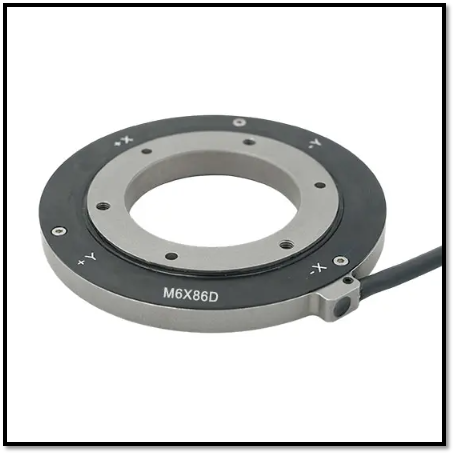
Not all sensors are created equal. Seriously. 6-axis force sensors? They handle three linear and three rotational axes. Perfect for robotics and complex automation. Torque sensors? Focused on rotational forces, motors, drives, and torque-controlled processes, you get the picture.
Here’s the kicker: sometimes off-the-shelf just doesn’t cut it. That’s where custom sensors step in. They can be shaped, sized, or tuned for extreme conditions. So, your measurement is accurate, and your machinery runs smoothly. Hassle-free and precise.
Precision: The Heart of Performance
Here’s the thing: if your sensor isn’t precise, nothing else matters. Quality dips. Safety risks climb. Efficiency tanks. When picking a Custom Sensor Manufacturing partner, look at calibration standards (ISO, NIST), resolution, sensitivity, and drift over time.
Quick story: a robotics lab once used a generic torque sensor. Measurements were off. Repeated defects. Total nightmare. Then they switched to a custom industrial-grade 6-axis force sensor boom. Problem solved. Lesson learned: precision pays off.
Consider Environmental and Mechanical Factors
Industrial setups aren’t gentle. Heat, dust, vibration, and humidity all affect sensors. So, make sure your Custom Torque Force Sensor Buy Online is rated for the conditions it will face. Check IP ratings, shock and vibration resistance, and material compatibility.
A sensor that survives the environment isn’t just a convenience; it’s peace of mind. Fewer breakdowns. Less downtime. And yes, happier teams.
Leverage Manufacturer Expertise
You don’t want to go it alone. Partner with a manufacturer who knows their stuff. Ask about past projects, integration support, and flexibility with sensor customization solutions for 6-axis.
An educated partner can check your sensor is to spec, reliable and slips into your system without a snag. Believe me, you will be glad of it later.
Step-by-Step Checklist Before Buying
To make it easy, here’s a cheat list:
- Define your application (forces, torques, environment).
- Pick the right sensor type (6-axis, torque, or custom).
- Review accuracy, calibration, and tolerances.
- Check environmental ratings and durability.
- Evaluate manufacturer expertise.
- Request a demo or datasheet before committing.
Follow this, and you’ll dodge mistakes, save time, and get a sensor that actually works for your setup.
Conclusion
Choosing the right sensor doesn’t have to feel impossible. If you understand your application, prioritize precision, account for the environment, and lean on a trusted expert, you’ll land the perfect industrial-grade 6-axis force sensor or custom torque force sensor.
Looking for a partner who gets it? MareX delivers reliable custom sensor manufacturing and top-notch Sensor Customization Solutions for 6-Axis. They know the experience, expertise, and assistance to ensure that you get it the first time. Why wait? Upgrade your industrial system today and feel the difference in precision and performance.
The post How to Choose the Right Custom Sensor for Your Industrial Application: A Step-by-Step Guide appeared first on MareX.
]]>The post Advantages of Force Control Grinding System Automation appeared first on MareX.
]]>Advantages of Force Control Grinding System Automation
Advantages of Force Control Grinding System Automation
With the advancement of lean manufacturing, environmental protection policy requirements, and the needs of the factory’s own development, both manual operation and robots have shown certain limitations and cannot meet the growing demand.
Advantages of Force Control Grinding System Automation
First of all, the method based on manual operation mainly depends on the experience of the workers. People have vision, touch, their own thinking and judgment, and can flexibly handle workpieces of any shape and size difference, which is the great advantage of manual grinding. The more experienced technical workers there are, the higher the efficiency and the better the treatment effect.
However, its disadvantages are also obvious. Manual grinding can only rely on feeling and experience. It is impossible to know how much force you have used, nor can it guarantee the stable output of force, the uniformity of the workpiece surface and the consistency of the effect between workpieces; uncertain labor leads to fluctuations in productivity and output.
From a health perspective, the large amount of diffuse dust, noisy noise and high-frequency vibration of the grinder generated during the grinding process pose a great threat to the health of operators, resulting in a sharp reduction in the number of employees. Compared with manual grinding, the use of can achieve efficient and stable continuous operation according to the edited path, helping enterprises to effectively improve production efficiency, product yield and reduce production costs. In the case of complex and diverse workpiece materials, there are many processes involved in workpiece forming, including sheet metal, stamping, casting, injection molding, CNC, etc. Due to differences in material properties and forming methods, the workpiece will have dimensional tolerances, and there will only be differences in data size.
Since force-controlled grinding usually runs precisely according to a debugged path, the running path is fixed and the error is extremely small, when the surface size of the workpiece is slightly larger or the positioning position is slightly deviated, the grinding effect will fluctuate greatly, or even grinding may not be performed. Or due to excessive pressure and excessive grinding, the yield is low and mass production cannot be achieved.
As an independent control execution system, force control grinding is specially developed for polishing and grinding applications. It has more advantages in helping customers overcome the difficulties of automation upgrades, and helps customers reduce costs and improve efficiency in terms of personnel, equipment and processes:
Through flexible force control, the grinding automation of enterprises can be realized;
Make the surface effect of batch-produced workpieces more uniform and consistent; increase production and reduce subsequent grinding costs;
The programming and teaching of robots become very simple, which can greatly improve the debugging efficiency and reduce the requirements for operators;
Data can be stored and retrieved, so grinding and polishing can also be included in the digital production line system;
Reduce the load requirements of the robot for grinding and polishing, extend the life of the robot and grinder, and reduce equipment costs;
In order to make it easier and more cost-effective for customers to apply automated polishing and finishing solutions, the force-controlled grinding system is also being further developed.
The post Advantages of Force Control Grinding System Automation appeared first on MareX.
]]>The post The market prospects for collaborative robot end tools are huge! appeared first on MareX.
]]>The market prospects for collaborative robot end tools are huge!
The rapid development of the industrial robot industry has also promoted the growth of the collaborative robot end-tool market. According to industry analysis, the transaction volume of robot end-tools exceeded US$ 2.5 billion in 2018 and is expected to reach US$ 6.5 billion by 2025 , maintaining a compound growth rate of 14% . Due to the growth of the automation market, the use of end-tools, a key part of robot solutions, in the industry has begun to rise rapidly.
With the continuous breakthroughs in technologies such as artificial intelligence, the concept of intelligence has set off waves in the field of automation and brought new product inspiration. Automation products are beginning to become intelligent, achieving new levels that were previously unattainable through integrated sensors, artificial intelligence, and the Internet of Things.
Collaborative robot end-of-line tooling is a new direction for the industry. It can collect key data and communicate it to the robot to improve its accuracy and overall performance, further protecting the safety of the goods, especially some fragile objects. The smart gripper can control the appropriate force to ensure that it can be safely delivered to the operator.
In complex production lines, there are often some parts that are not sorted and sorted, and traditional grippers are powerless. Using collaborative robot end tools, it can adapt to the grasping of various objects without external cables, and the direction can be adjusted to adapt to different objects.
More and more companies are experiencing the benefits of collaborative robots in various automation scenarios. Advantages such as easy installation and debugging, small programming amount, and plug-and-play make collaborative robots suitable for more scenarios.
Under the trend of human-machine collaboration, collaborative robot end-of-line tools have achieved good growth. Last year, nearly 14,000 collaborative robots were installed worldwide, and the annual installation volume of collaborative robots increased by 23% from 2017 to 2018. If collaborative robot sales continue to grow, end-of-line tools will double in a few years, creating unprecedented EOAT market opportunities.
In principle, one robot can only perform one type of work. If you want to perform complex work, you need to constantly change the robot. When this exchange operation is done manually, it not only takes time, but it can also lead to human errors. If you use a collaborative robot end tool, the robot can automatically change the manipulator by itself. In addition, even if it is changed manually, the operation becomes very simple and quick.
Even on robots that do not require replacement of the gripper, tool, or end effector, etc., using a gripper quick changer can simplify maintenance or fine-tuning. In addition, for laboratory robots in R&D departments or schools, simply replacing the gripper allows the robot to be shared, making it convenient to carry out various experiments.
In some cases, manufacturers use collaborative robot end-of-line tools mainly because of repetitive and boring work and the lack of suitable workers. In addition, manufacturers want to find ways to improve efficiency, even if the run time is reduced by a few seconds, it can bring more product output. Buying more robots and grippers can create huge benefits.
In the manufacturing industry, intelligent and simplified automation methods for production tasks will become more and more popular. Manufacturers do not need to spend too much time and money to deploy and can apply faster. Terminal tools are part of the automation strategy. , which can greatly improve productivity.
The post The market prospects for collaborative robot end tools are huge! appeared first on MareX.
]]>The post The perfect fusion of traditional Chinese medicine wisdom and robots appeared first on MareX.
]]>The perfect fusion of traditional Chinese medicine wisdom and robots
With the breakthrough in the field of digitalization of traditional Chinese medicine, the deep integration of robotics, large models of traditional Chinese medicine and artificial intelligence algorithms is leading the construction of “technological, visual, data-based, intelligent and globalized” traditional Chinese medicine, and promoting traditional Chinese medicine to a higher level of intelligence. Relying on the traditional Chinese medicine research team and senior treatment institutions, the new generation of traditional Chinese medicine robots, after years of technical accumulation and multiple rounds of product iterations, can provide patients with more efficient, accurate, convenient and personalized traditional Chinese medicine medical services, intelligently identify the meridians and treatment pathways throughout the body, ensure the efficiency and accuracy of treatment, and even surpass traditional techniques in terms of pressure.
MareX massage robot is your best partner for health management. It uses a combination of professional-grade physiotherapy technology, intelligent sensing and bionics technology to deliver high-frequency electromagnetic energy to target tissues and perform selective heating physiotherapy for sub-healthy people. It uses a robotic arm to replace human hands for physiotherapy, with the characteristics of light labor, precise positioning, intelligent control of temperature and strength, and automatic planning of massage paths. It is a fusion of traditional physiotherapy and intelligent technology solutions. It uses big data, AI visual algorithms, and Internet of Things technologies to solve the sub-health problems of modern people and enhance human immunity and other core needs.
The robot’s high-definition camera and dialectical recognition function allow it to accurately lock acupuncture points, and its ergonomic design ensures that every contact is very comfortable. The display screen provides professional solutions, such as expelling cold and dampness, strengthening the waist, warming the back and expelling cold, relaxing the shoulders and neck, and shaping the waist, which can fully meet your health needs.
The post The perfect fusion of traditional Chinese medicine wisdom and robots appeared first on MareX.
]]>The post How to achieve force control of a collaborative robotic arm using a six-axis force sensor? appeared first on MareX.
]]>How to achieve force control of a collaborative robotic arm using a six-axis force sensor?
The use of six-axis force sensors to realize the force control of the collaborative robotic arm can be realized through the following steps:
1. installing the six-axis force sensor: first of all, it is necessary to install the six-axis force sensor at the end of the collaborative robotic arm, which is used to sense the external forces and moments.
2. Collecting sensor data: Through programming, the data collected by the six-axis force sensor is transmitted to the controller of the robotic arm for real-time monitoring of external forces and moments.
3. design force control algorithm: according to the application requirements, design the corresponding force control algorithm. For example, the force control algorithm based on PID control can be designed to adjust the trajectory and strength of the robotic arm in real time according to the data collected by the sensor, so that it can operate according to the preset strength and direction.
4. Realize force control: Embed the designed force control algorithm into the controller of the robotic arm to realize force control. In actual operation, the robotic arm will be adjusted in real time according to the data collected by the sensor to ensure the accuracy and safety of the operation.
In conclusion, the use of six-axis force sensors to realize the force control of a collaborative robotic arm requires multiple steps such as installing sensors, collecting data, designing force control algorithms and realizing force control. Through these steps, the force control of the robotic arm can be realized to improve the operation precision and safety of the collaborative robotic arm.
The post How to achieve force control of a collaborative robotic arm using a six-axis force sensor? appeared first on MareX.
]]>The post Performance Evaluation and Selection Guide for Six-Axis Force Sensors for Industrial Robots appeared first on MareX.
]]>Performance Evaluation and Selection Guide for Six-Axis Force Sensors for Industrial Robots
Introduction
With the rapid development of industrial automation, the performance of six-axis force sensors, as core components in robotics technology, directly affects the robot’s operating accuracy, safety, and flexibility. This article aims to deeply explore the performance evaluation indicators and selection guidelines of six-axis force sensors for industrial robots, to help engineers and R&D personnel better understand and select sensors suitable for their application scenarios.
1. Overview of Six-Axis Force Sensor
A six-axis force sensor, also known as a six-dimensional force sensor, is a precision measuring device that can simultaneously measure the force and torque of an object in three directions. It is based on the interaction principle of force and torque in mechanics, and converts mechanical information into electrical signals for output through the tiny deformation of elastic elements (such as elastomers or elastic diaphragms). This sensor is widely used in robotics, aerospace, automobile manufacturing, biomechanics and other fields.
2. Performance Evaluation Indicators
1. Accuracy and sensitivity
Accuracy and sensitivity are important indicators for evaluating the performance of six-axis force sensors. Accuracy refers to the degree of deviation between the sensor’s measured value and the actual value, while sensitivity reflects the sensor’s ability to respond to small changes. For industrial robots, high-precision six-axis force sensors can ensure the accuracy and stability of robot operations.
2. Range and overload capacity
The range refers to the maximum load force (or torque) that the sensor can effectively measure. When selecting a sensor, make sure its range can meet the actual working requirements of the robot. In addition, overload capacity is also a factor that cannot be ignored. It refers to the ability of the sensor to maintain a certain measurement capability when exceeding its range. Good overload capacity can protect the sensor from accidental damage.
3. Linearity and hysteresis
Linearity describes the degree of linear relationship between sensor output and input, while hysteresis reflects the inconsistency of sensor output values during loading and unloading. For industrial robots, six-axis force sensors with low linearity and low hysteresis can provide more accurate measurement results and reduce error accumulation.
4. Resolution and Noise
Resolution refers to the amount of small signal changes that a sensor can distinguish. A high-resolution sensor can capture more subtle mechanical changes and improve measurement accuracy. At the same time, the noise level is also an important factor affecting sensor performance. A low-noise sensor can provide a clearer signal output.
5. Environmental adaptability
The working environment of industrial robots is complex and changeable, so the six-axis force sensor needs to have good environmental adaptability. This includes temperature stability, waterproof and dustproof capabilities (such as IP rating) and electromagnetic compatibility. Good environmental adaptability can ensure that the sensor can maintain stable measurement performance under different working conditions.
3. Selection Guide
1. Clarify application scenario requirements
Before choosing a six-axis force sensor, you first need to clarify the specific requirements of the application scenario, including measurement accuracy, range, frequency response, etc. Select the appropriate sensor model and specifications according to the requirements.
2. Investigate sensor brands and manufacturers
There are many six-axis force sensor brands and manufacturers on the market, and their product quality and performance vary greatly. Therefore, when choosing, you need to examine the manufacturer’s technical strength, product quality, after-sales service and other factors, and choose a reputable and powerful brand.
3. Evaluate the cost-effectiveness
Under the premise of meeting application requirements, the cost-effectiveness between the price and performance of the sensor needs to be comprehensively considered. We should not blindly pursue high prices or high performance while ignoring actual needs and economic costs.
4. Field testing and verification
Before finalizing the sensor model, it is recommended to conduct field testing and verification. The sensor is tested for performance by simulating actual working scenarios to evaluate whether its performance in actual applications meets expectations.
IV. Conclusion
As an important component of industrial robots, the performance of six-axis force sensors directly affects the operation and safety of robots. Through the introduction of this article, we hope to help engineers and R&D personnel better understand and select six-axis force sensors suitable for their application scenarios. In the selection process, it is necessary to comprehensively consider multiple factors such as accuracy, range, linearity, hysteresis, resolution, noise, and environmental adaptability, and conduct a comprehensive evaluation based on actual needs and economic costs. Finally, a six-axis force sensor with high cost performance and stable performance is selected to provide strong guarantee for the precise operation and efficient operation of industrial robots.
The post Performance Evaluation and Selection Guide for Six-Axis Force Sensors for Industrial Robots appeared first on MareX.
]]>The post Revolutionizing Precision: The Rise of Six-Axis Force Sensors appeared first on MareX.
]]>Revolutionizing Precision: The Rise of Six-Axis Force Sensors
Six-axis force/torque sensors, capable of measuring forces (Fx, Fy, Fz) and torques (Mx, My, Mz) simultaneously, are redefining precision across industries. With sub-Newton accuracy and real-time data processing, these sensors enable machines to “feel” and adapt to dynamic environments—a critical capability for applications ranging from robotic surgery to aerospace assembly.
Industry Applications Driving Demand
1.Humanoid Robotics
Leading robotics firms, including Tesla (Optimus) and Ubtech (Walker X), now rely on six-axis sensors for tasks requiring human-like dexterity. Installed in wrists, ankles, and grippers, these sensors enable precise force feedback during object manipulation and adaptive walking on uneven terrain.
2.Automotive & Aerospace
In BMW’s smart factories, six-axis sensors reduced assembly defects by 43% through real-time torque monitoring during engine installations. Aerospace applications include SpaceX’s satellite docking systems and flight attitude control, where sensors achieve 5kHz dynamic response rates for split-second adjustments.
3.Medical Advancements
Surgical robots integrated with six-axis sensors, such as those developed by Haixi Medical, demonstrate 97% force feedback accuracy, enabling safer minimally invasive procedures. Rehabilitation devices also leverage this technology for personalized therapy regimens.
Market Outlook & Technological Trends
The global six-axis sensor market is projected to grow at a CAGR of 18.7% through 2030, driven by:
AI Integration: Machine learning algorithms analyze sensor data to optimize robotic motion planning and predictive maintenance9.
Miniaturization: MEMS-based designs like HBM’s K-SP5/8KG-JW2 now fit into micro-robots and IoT devices without sacrificing performance
Looking Ahead
As six-axis sensors evolve toward nanoscale resolution and cloud-connected ecosystems, their role in Industry 4.0 and human-robot collaboration will expand exponentially. With Kelishi and Huawei paving the way, China is poised to lead this transformative wave, reshaping industries from intelligent manufacturing to AI-driven healthcare.
For technical specifications or partnership inquiries, visit [Company Website:https://mare-x.com/] or contact [email protected]
The post Revolutionizing Precision: The Rise of Six-Axis Force Sensors appeared first on MareX.
]]>The post Applications of Collaborative UR Robots in Automotive Manufacturing appeared first on MareX.
]]>Applications of Collaborative UR Robots in Automotive Manufacturing
Let’s explore six key applications of collaborative UR robots in automotive production: polishing, welding, painting, assembly, machine tending and material removal, and quality inspection.
1.Assembly
Collaborative UR robots play a vital role in automotive factories, including assembly plants. They handle repetitive tasks on production lines, such as installing door handles and windshield wipers, freeing workers to focus on higher-value tasks.
UR robots like the UR16e (16 kg/35.3 lbs payload capacity) manage larger/heavier components—wheels, hatches, and hoods—with precision.
2.Painting
Painting robots deliver unmatched consistency and 24/7 availability, surpassing human capabilities. They are widely adopted by automakers for:
Applying perfectly uniform coatings on large surfaces
Reducing paint waste by 15-20% vs. manual spraying
Eliminating health risks from toxic automotive paints
Minimizing human error with ±0.1mm repeatability
3.Welding
Collaborative UR robots excel in hazardous arc/TIG/MIG/laser/ultrasonic welding applications. The UR+ ecosystem provides turnkey solutions like:
Olympus UR Welding System: Cost-effective for small parts (e.g., brackets, exhaust components)
Automated Spot Welding: 200% faster than manual processes
Seam Tracking: AI-powered vision systems ensure weld path accuracy
4.Material Removal & Polishing
Critical for finishing processes, UR robots perform:
Grinding: Surface prep for composites
Deburring: Edge refinement on cast parts
Polishing: Mirror finishes on trim components
Drilling: Precision hole patterns in chassis
Equipped with force-torque sensors, they adapt to material variations while maintaining ISO 9001 quality standards.
5.Quality Inspection
UR robots automate vehicle QA through:
3D Vision Systems: Detect sub-0.1mm defects
Dimensional Metrology: Verify tolerances <±0.05mm
Surface Scanning: Identify paint flaws invisible to the human eye
Integrated UR+ toolkits reduce inspection time by 40% while improving defect detection rates.
6.Automotive Innovation
UR robots drive industry growth by: Cutting production cycle times by 30% Reducing workplace injuries by 72% (OSHA data) Enabling flexible small-batch production via quick redeployment
With compact, fence-free designs, UR’s collaborative robots seamlessly integrate into existing workflows—from legacy factories to EV battery gigafactories.
The post Applications of Collaborative UR Robots in Automotive Manufacturing appeared first on MareX.
]]>